Why the EU Is Finally Taking Geothermal Seriously - And Why Northern Germany Should Pay Attention
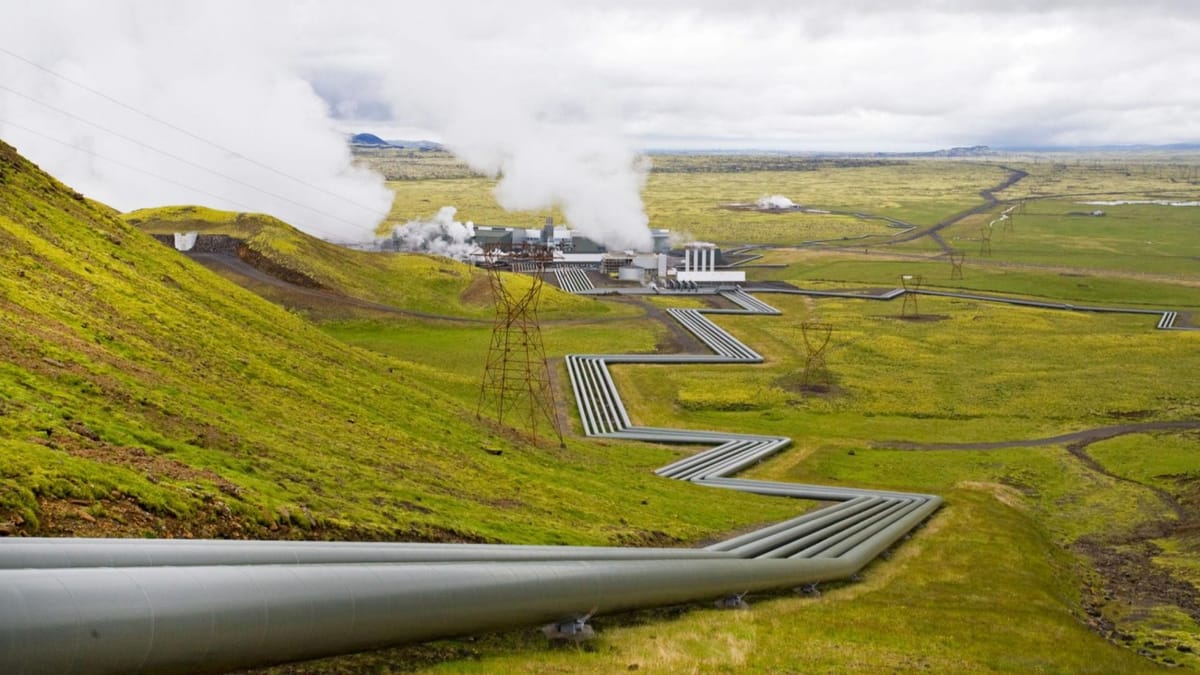
For years, geothermal sat in the background of Europe’s energy transition.
Wind scaled. Solar accelerated. Hydrogen captured headlines.
Geothermal? It was mentioned — rarely prioritized.
That is changing.
And the reason is not climate branding.
It’s energy security.
Money Is Now Moving
Under REPowerEU, the EU mobilised €300+ billion to reduce fossil fuel dependence and accelerate domestic renewable capacity.
While wind and solar absorb most visibility, geothermal is increasingly appearing in funding windows tied to:
- District heating decarbonisation
- Industrial heat replacement
- Baseload renewable generation
The EU Innovation Fund, financed through the EU ETS, has a total budget of approximately €40 billion (2020–2030).
Recent large-scale calls have included geothermal among eligible technologies for:
- First-of-a-kind commercial plants
- Deep geothermal heat networks
- Enhanced Geothermal Systems (EGS)
For capital-heavy drilling projects, that matters.
Because geothermal’s biggest barrier is not operating cost.
It’s upfront geological risk.
And the EU is now partially underwriting that risk.
EGS: Where Oil & Gas Meets Energy Transition
Enhanced Geothermal Systems are receiving increasing attention at EU level.
EGS essentially adapts:
- Deep drilling
- Reservoir stimulation
- Subsurface modelling
— techniques long mastered in oil & gas — to extract heat rather than hydrocarbons.
Projects in France, Germany, and the Netherlands are testing EGS for scalable deployment in non-volcanic geology.
For regions like Northern Germany, that bridge is critical.
Because unlike Iceland, Germany does not sit on a volcanic rift.
It sits on sedimentary basins.
And sedimentary basins require engineering persistence.
But Is It Competitive? A Look at LCOE
Let’s talk economics.
Levelised Cost of Electricity (LCOE) estimates in Europe (ranges vary by site and financing):
- Utility-scale solar: ~€40–60/MWh
- Onshore wind: ~€40–70/MWh
- Offshore wind: ~€70–120/MWh
- Deep geothermal electricity: ~€70–110/MWh
At first glance, geothermal does not look dramatically cheaper.
But that comparison misses something important:
Capacity factor.
Solar: 10–20% Wind: 25–50% Geothermal: 70–95%
Geothermal is not chasing peak production.
It provides continuous output.
In grid stability terms, that changes the equation.
And for district heating, geothermal heat can compete directly with gas — particularly under high ETS pricing.
🇩🇪 Why This Is Quietly Relevant for Northern Germany
Northern Germany is building wind at scale.
But heating remains gas-heavy.
Deep geothermal in Bavaria is already expanding.
The north — Lower Saxony, Hamburg region, Schleswig-Holstein — has moderate geothermal gradients, but significant district heating demand.
With EU funding absorbing part of the drilling risk, the question becomes:
Will northern utilities move early — or wait?
Because geothermal projects are slow to permit and slow to drill.
If funding windows close before feasibility studies begin, opportunity narrows.
This Is Not About Replacing Wind
Wind and solar will continue to dominate new capacity additions.
But geothermal plays a different role.
It reduces gas imports structurally. It stabilises heating systems. It provides predictable baseload.
In an increasingly electrified Europe, predictability has value.
And the EU appears to be recognizing that.
If you're working in:
- Stadtwerke
- District heating infrastructure
- Deep drilling
- Subsurface modelling
- EU-funded energy projects
I’d be interested in your view:
Is geothermal finally shifting from “interesting option” to structural pillar?
Comments ()