Why Northern Germany Will Dominate Europe’s Energy Engineering Decade
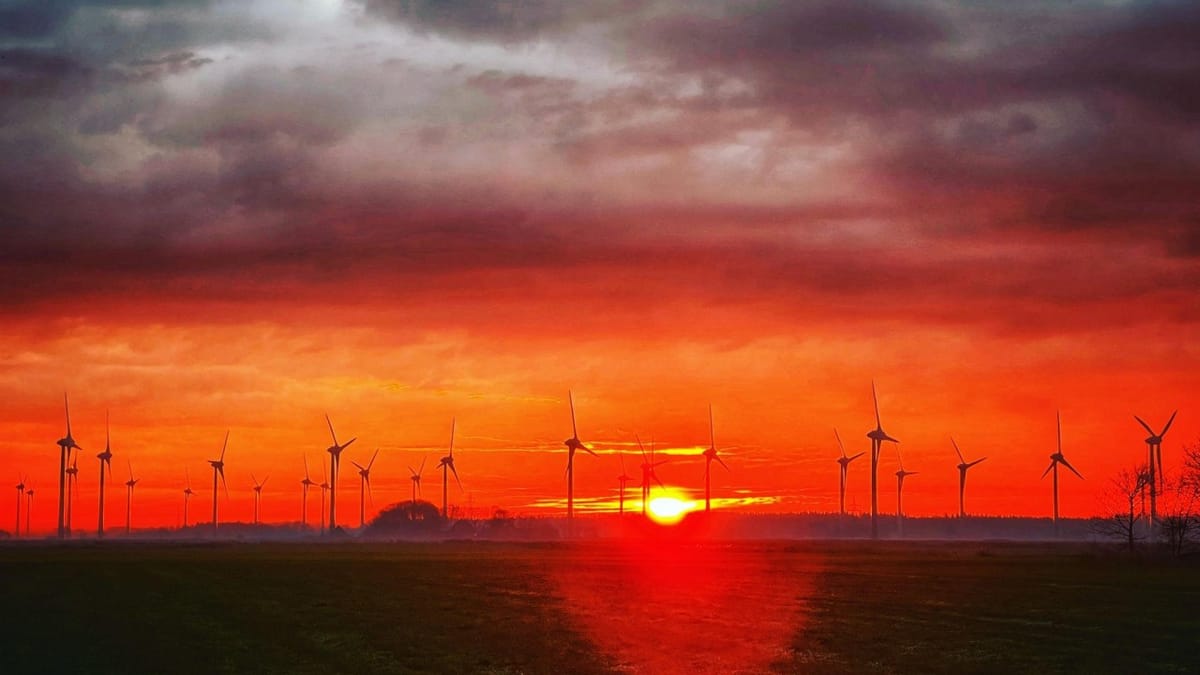
Stand in a wind corridor in Schleswig-Holstein or Niedersachsen and the narrative around Europe’s energy transition becomes very different from what you read in policy briefings.
Out there, the transition is not a slogan. It is torque.
You hear the steady aerodynamic loading of 70-meter blades cutting through turbulent North Sea air. You feel the structural mass of towers designed to handle millions of fatigue cycles. You see converter stations quietly translating variable-frequency generation into grid-stable power for industries hundreds of kilometers away.
Northern Germany is not simply adding renewable capacity. It is building an industrial energy system — and that difference will define the next decade of European energy engineering.
From Expansion to Optimization
Germany’s early renewable expansion was shaped by strong policy incentives. Installed capacity was the dominant metric. Speed of deployment was the success indicator.
That phase is ending.
Today, the questions are more demanding:
- How do we maximize fleet availability under merchant exposure?
- How do we reduce lifecycle OPEX across 20–30 years?
- How do we stabilize grids with high inverter-based generation?
- How do we integrate hydrogen production without destabilizing the network?
The shift is subtle but decisive. We are moving from subsidy-driven expansion to industrial-scale optimization.
Regions that can engineer reliability, not just capacity, will dominate. Northern Germany is uniquely positioned for that phase.
Mechanical Reality Behind Every Megawatt
When a turbine from Siemens Gamesa Renewable Energy or Nordex is announced as “15 MW,” the public sees a number.
Engineers see a dynamic system operating under stochastic loading:
- Variable shear profiles across rotor diameter
- High-cycle fatigue in blade root connections
- Micro-pitting risk in gearbox bearings
- Salt-induced corrosion in offshore nacelles
- Thermal stress management in power electronics
Availability is not political. It is mechanical.
It lives in vibration spectra, lubrication chemistry, load calculations, and the discipline of root cause analysis.
Northern Germany has accumulated decades of operational data from both onshore and offshore fleets. Failure modes are no longer abstract engineering risks; they are documented, analyzed, and iteratively improved.
That learning curve is a competitive advantage.
The Coming Skills Bottleneck
As turbines scale beyond 12–15 MW offshore, complexity increases non-linearly. Rotor diameter increases aerodynamic load variability. Drivetrain torque rises dramatically. Power electronics become more central to grid interaction.
The industry’s next constraint will not be steel or financing.
It will be competence.
Modern wind systems require hybrid profiles:
- Mechanical intuition for structural stress and rotating machinery
- Electrical understanding of converters and grid codes
- Digital literacy for SCADA analytics and condition monitoring
- Offshore safety capability under harsh conditions
Purely mechanical roles are no longer sufficient. Purely electrical roles struggle with physical system realities.
Northern Germany benefits from a dense vocational and industrial ecosystem that historically sits at the intersection of heavy industry, maritime operations, and electrical infrastructure. That hybrid culture matters.
Infrastructure Density as Strategic Leverage
Few European regions combine:
- Large-scale offshore clusters in the North Sea
- Established onshore wind corridors
- Major OEM presence
- HVDC transmission corridors linking north and south
- Port infrastructure capable of handling next-generation components
Energy engineering scales where physical systems intersect. Ports, grids, turbines, industrial consumers, and now hydrogen pilots form an integrated platform in the north.
This is not theoretical potential. It is infrastructure already under tension — and therefore already learning.
Reliability Will Define the Winners
As Europe electrifies transport, heating, and industry, renewable assets move from “supplemental” to “foundational.” Intermittency management, grid-forming inverters, and system-level resilience will separate stable regions from fragile ones.
In that environment, engineering culture becomes decisive.
Preventive maintenance discipline. Rigorous fault diagnostics. Systems thinking across mechanical and electrical domains.
Regions that internalize those principles will not just install capacity — they will operate it profitably for decades.
Northern Germany has been stress-tested by scale, weather, corrosion, and grid constraints. That experience compounds.
The next decade of European energy will not be defined by headlines about gigawatts.
It will be defined by who can keep those gigawatts running.
And the next bottleneck won’t be capital.
It will be competence.
Comments ()