Landsvirkjun Briefing.
Strategic Briefing
Securing Landsvirkjun's Geothermal Assets
Deploying direct, in-situ geomechanical intelligence to de-risk conventional plays, optimize infrastructure capital, and guarantee long-term PPA obligations.
The Directive: Focus on Conventional Plays
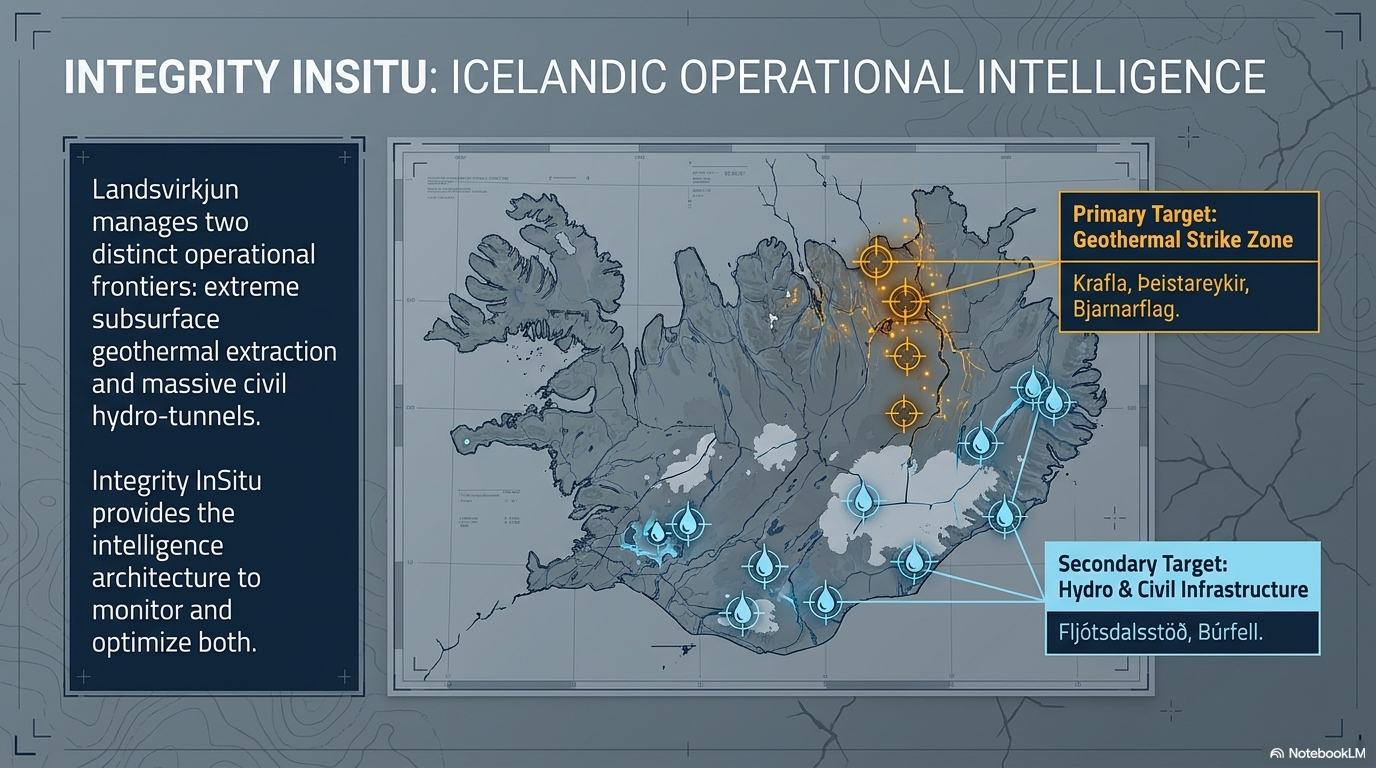
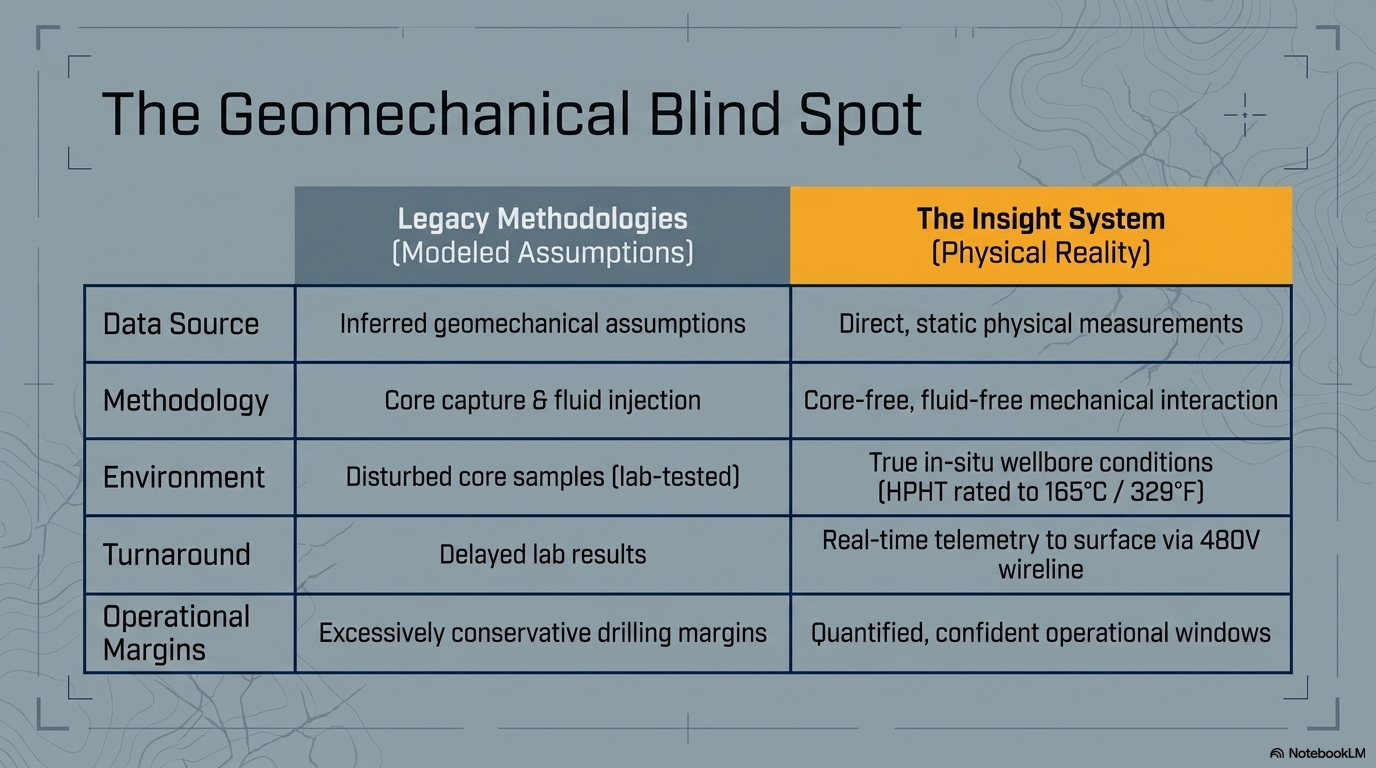
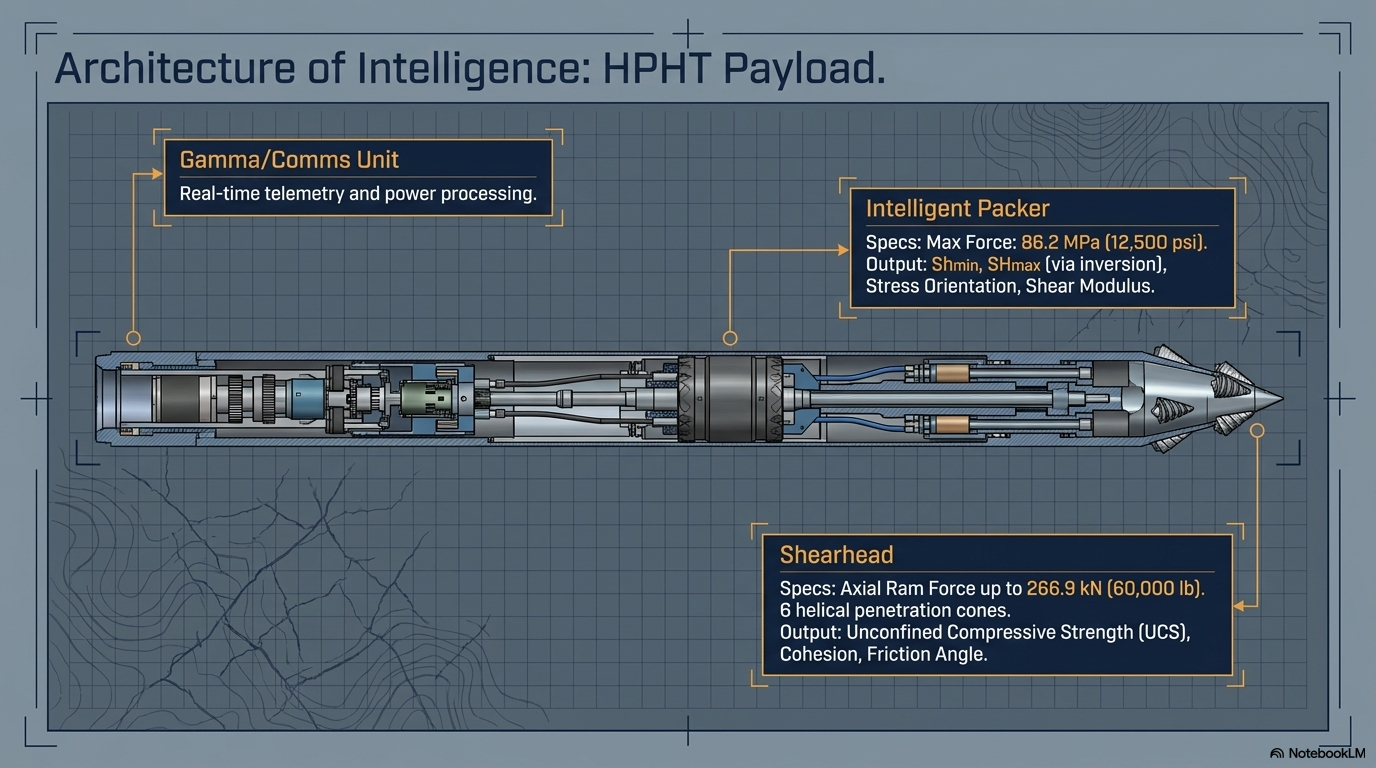
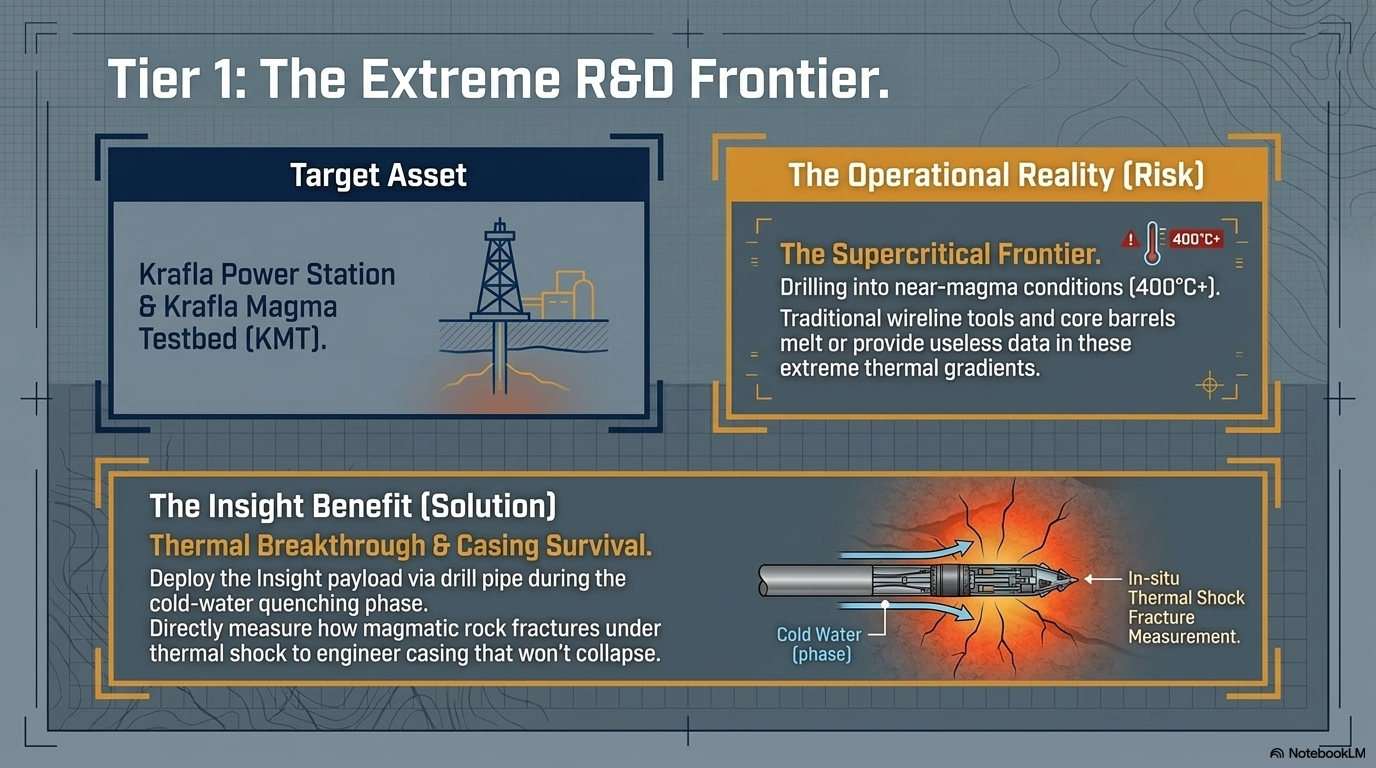
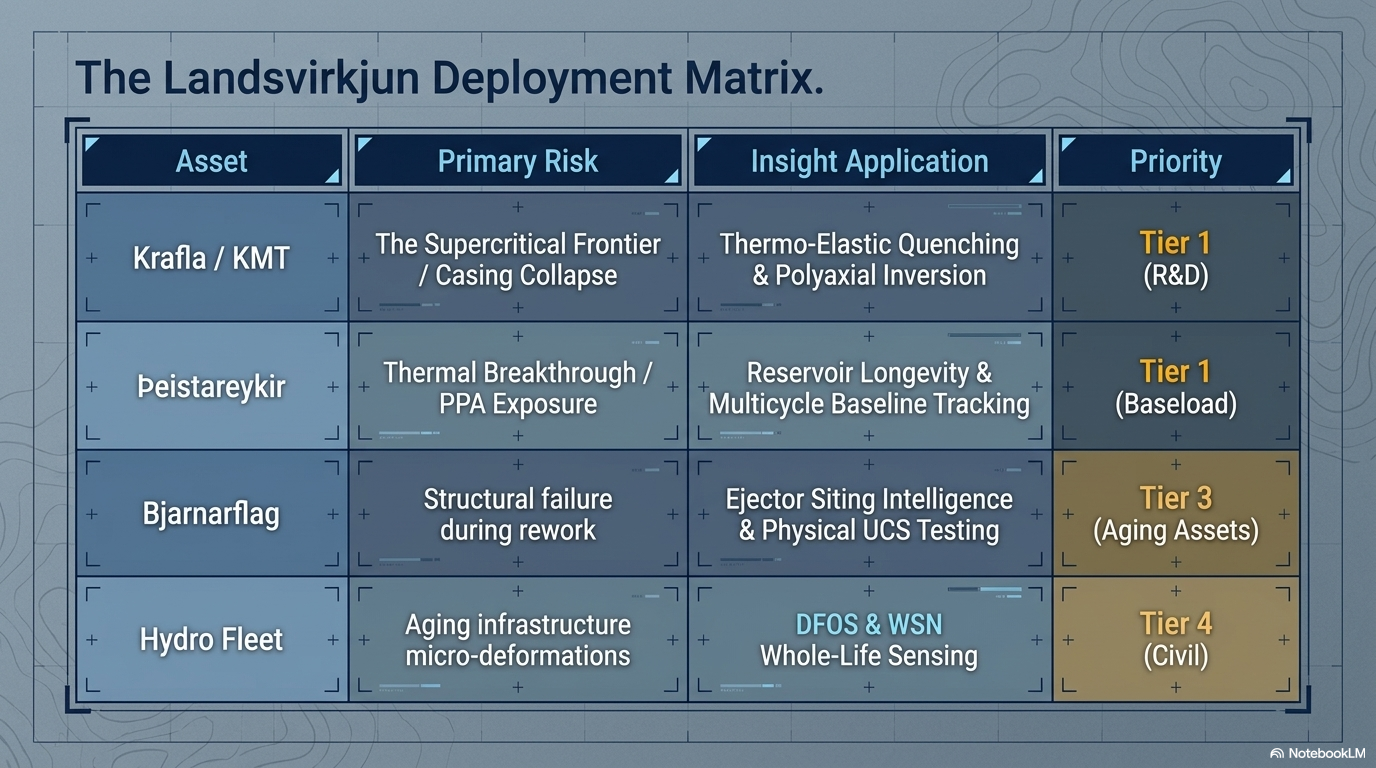
In alignment with executive directives, our focus remains strictly on securing and optimizing standard, conventional geothermal assets. We are bypassing high-risk, extreme R&D distractions like the 900°C magma-drilling phases. Instead, the Insight system provides physical, quantifiable in-situ rock mechanics—without coring—to ensure the structural integrity and operational longevity of Þeistareykir, Bjarnarflag, and the conventional overburden of Krafla.
Zero Core Required
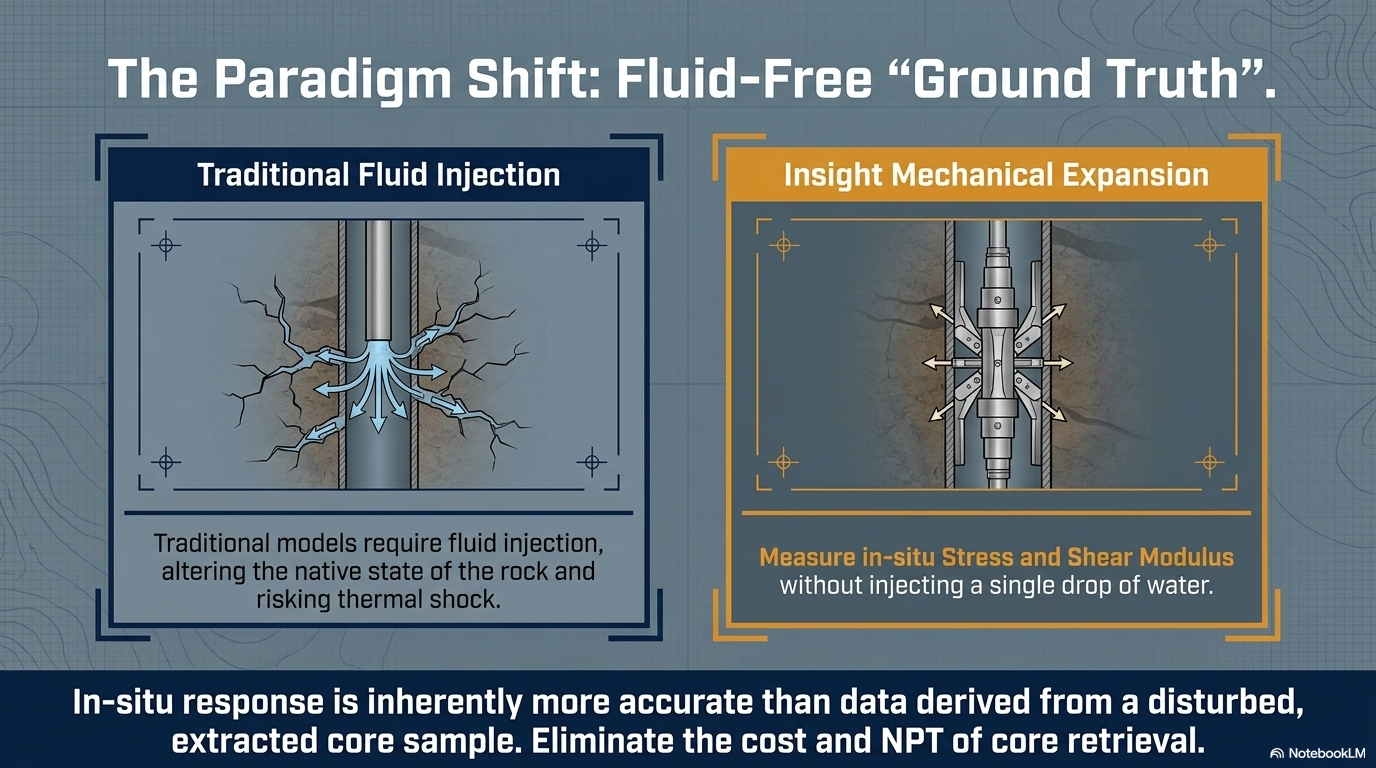
Direct measurement of UCS, Cohesion, and Friction Angle without the cost, NPT, or thermal disturbance of core extraction.
Real-Time Data
Single-trip wireline/pipe deployment feeds physical data to surface instantly for immediate engineering adjustments.
HPHT Proven
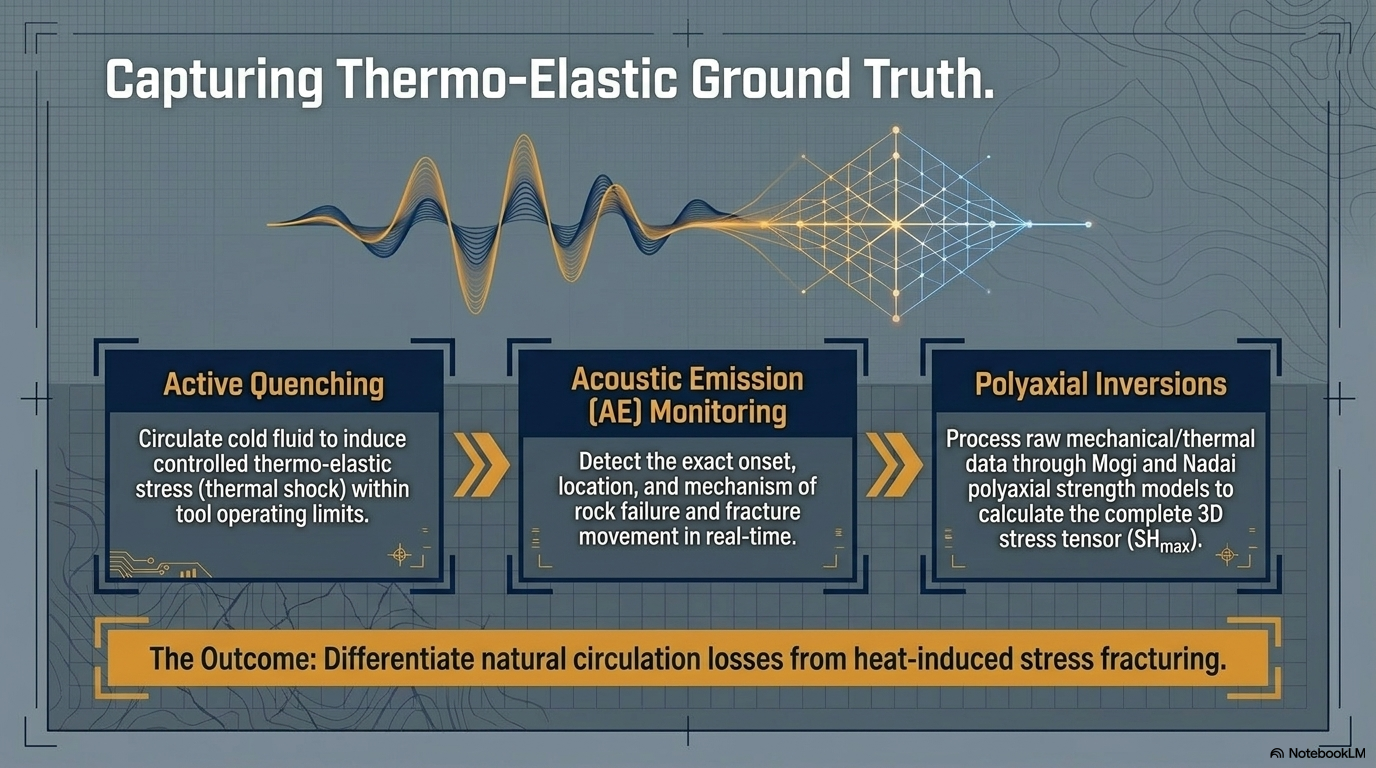
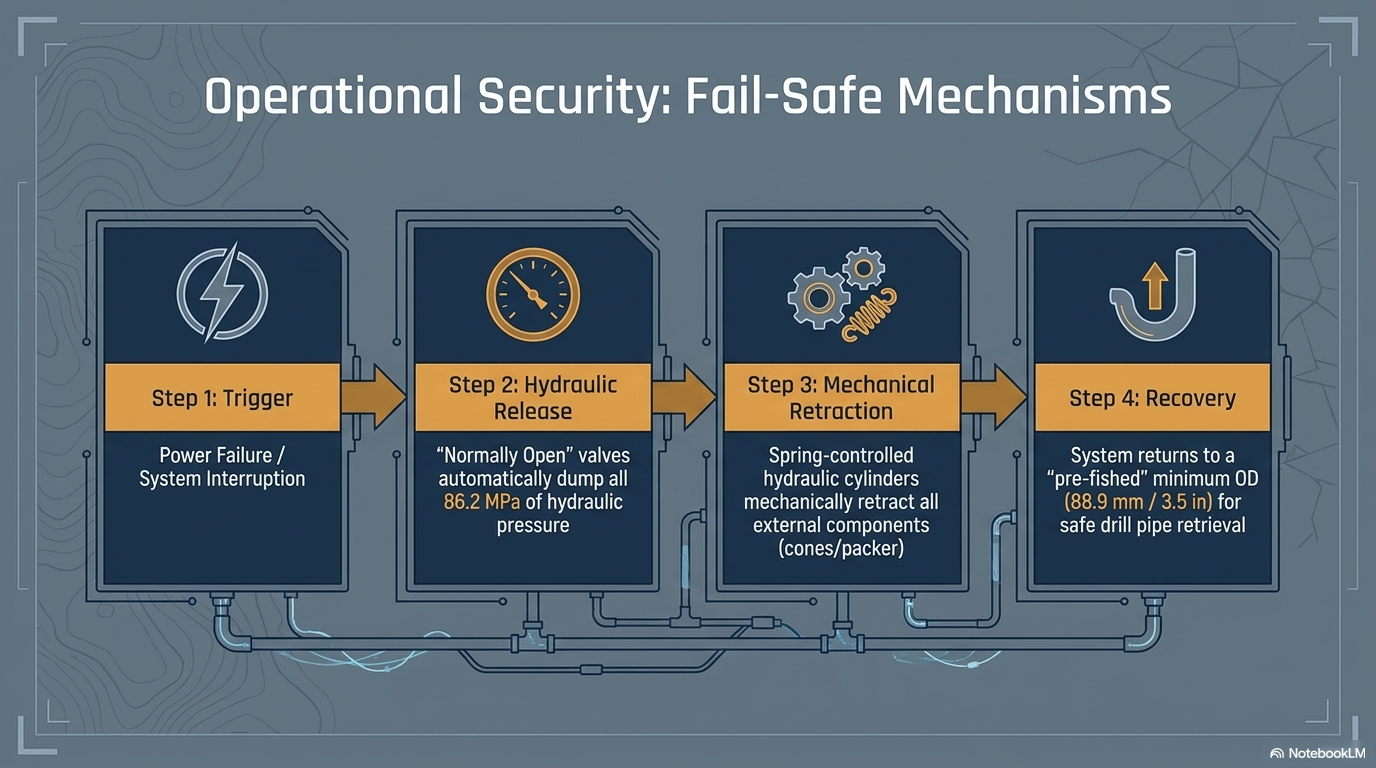
Engineered for intense downhole conditions (165°C / 329°F) utilizing cold-water mitigation for deeper conventional deployments.
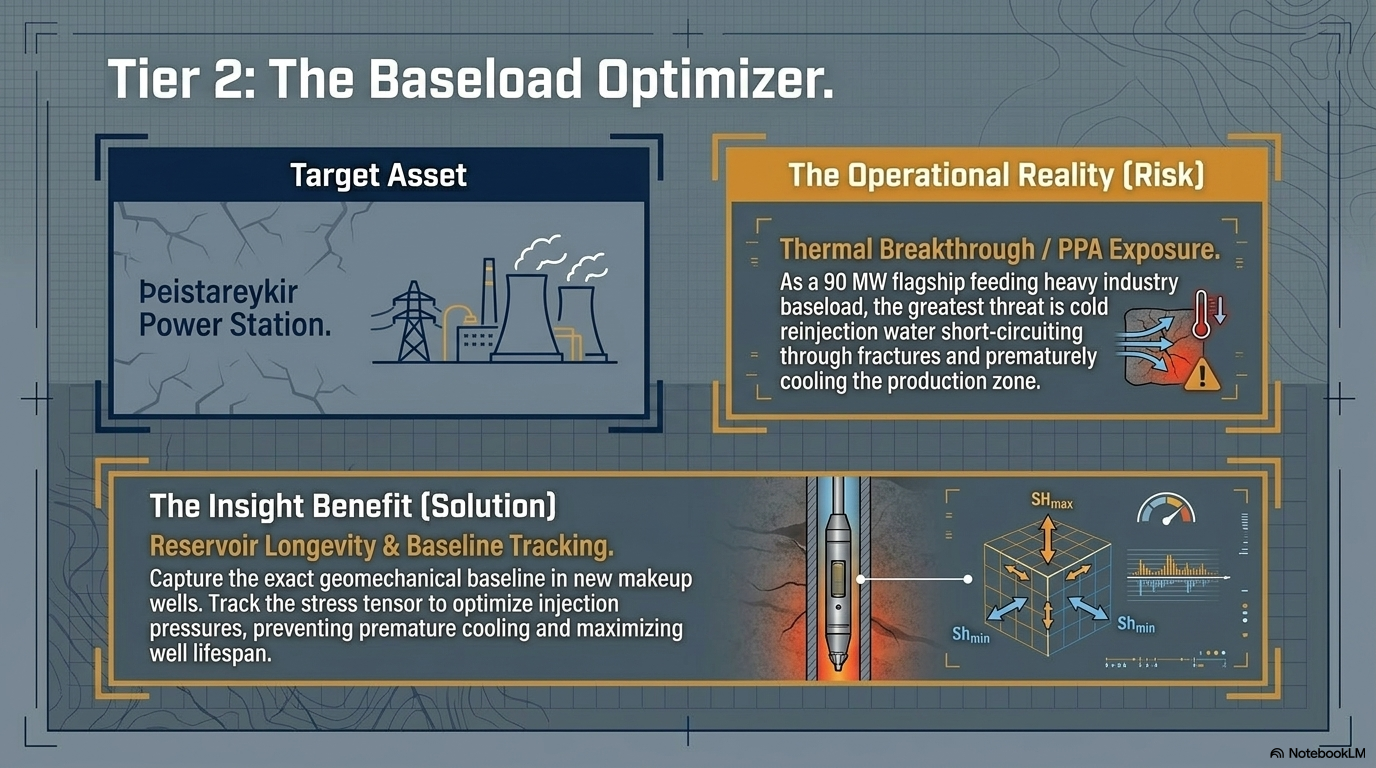
Þeistareykir: The Baseload Asset
The Aim: Safeguarding the longevity and baseload reliability of Landsvirkjun's flagship operation to definitively meet major PPA obligations, such as the Norðurál contract.
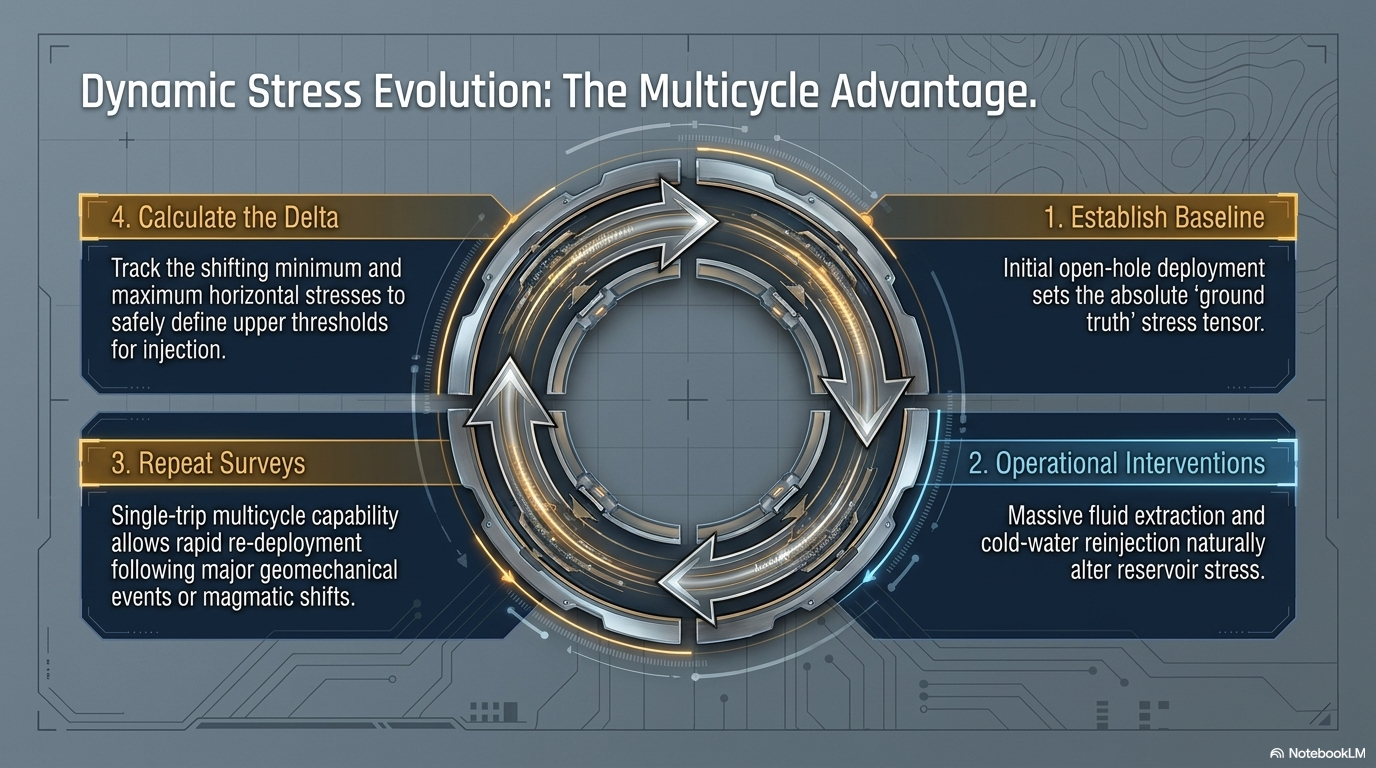
The Angle: By deploying the Insight tool, engineers establish an irrefutable physical baseline of geomechanical stress. This empowers the team to track in-situ stress evolution over a 10-year horizon. Understanding these exact mechanics allows for the precise optimization of fluid injection intervals, actively preventing premature thermal breakthrough or reservoir destabilization that standard modeling often misses.
Reservoir Stress Stability Projection (10-Year Model)
Optimized injection based on Insight physical data maintains critical stress thresholds, avoiding thermal breakthrough.
Capital Risk Exposure: Retrofit Planning
Direct measurement eliminates the broad uncertainty bounds of legacy modeling, isolating actionable engineering targets.
Bjarnarflag: The Infrastructure Retrofit
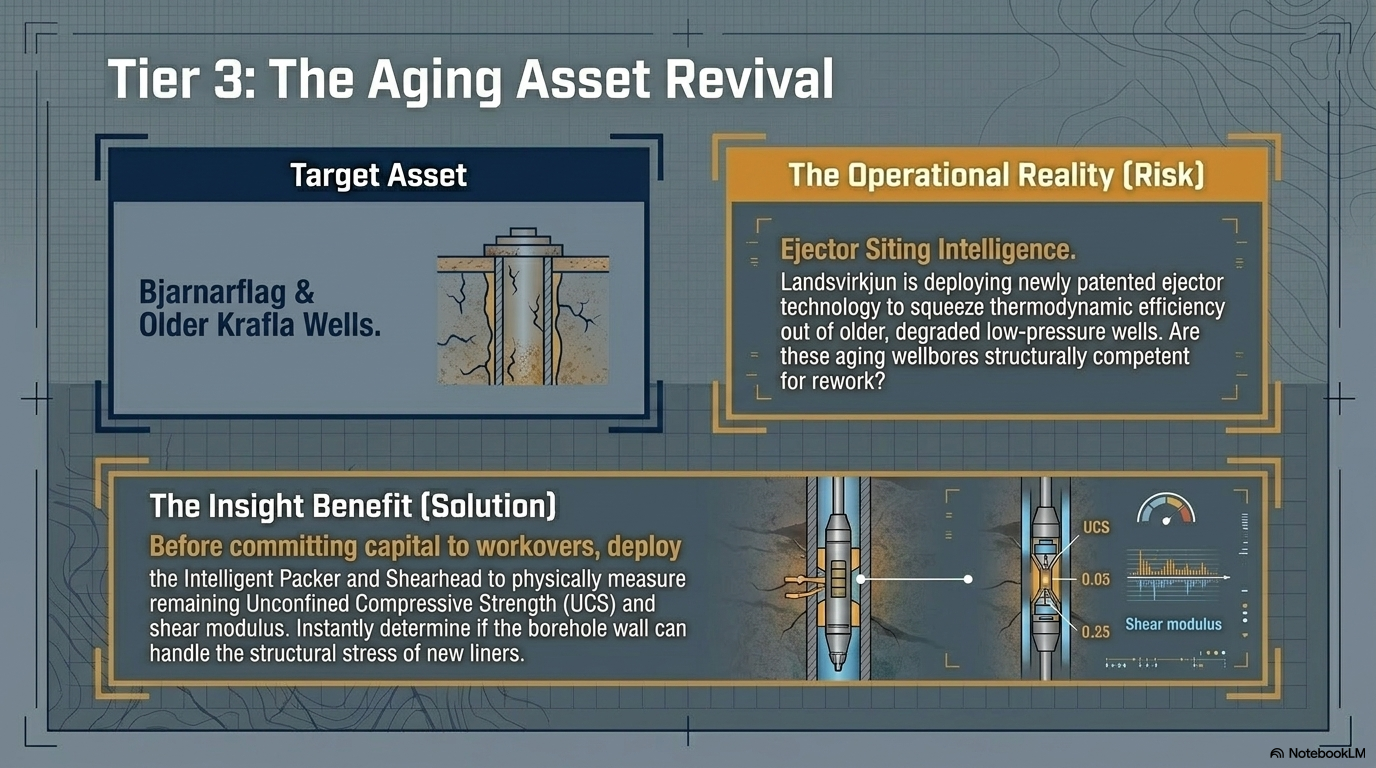
The Aim: Drastically de-risking heavy capital deployments, specifically the planned ejector retrofits and surface/subsurface infrastructure upgrades.
The Angle: Models estimate, but measurements confirm. Before committing millions in capital to mechanical upgrades, the Insight tool measures exact in-situ wellbore competence. This guarantees that the actual rock mechanics and structural integrity of the reservoir can safely support the intended surface and subsurface investments, preventing costly post-deployment failures.
Krafla / KMT: Conventional Overburden
The Aim: While extreme magma-drilling is completely off the table, the upper sections of the Krafla system remain standard, conventional high-temperature environments that require precise engineering.
The Angle: Deploy the Insight tool using standard cold-water mitigation within the conventional overburden layer (0 to ~1.5 km). This yields the critical physical SHmax and Unconfined Compressive Strength (UCS) baselines that engineers desperately need. This hard data dictates how to securely set and cement the upper casing strings before drilling operations push anywhere near the supercritical zones.
The KMT R&D Value Proposition
We propose an initial R&D agreement to deploy the Insight tool specifically at the KMT site's conventional overburden. This provides Landsvirkjun with the exact, uncompromised casing baseline data required for safe operations, while serving as a low-risk, high-reward proof-of-concept for the Insight tool in standard Icelandic lithology. It isolates the value to the conventional play, generating immediate engineering ROI without venturing into magma-risk territories.
Krafla Overburden: Geomechanical Depth Profile (0 - 1500m)
Identifying critical stress shifts and competent rock zones to optimize casing shoe placement.
Economic Impact of Physical Data
Based on prevention mechanisms against thermal breakthrough, casing failure, and lost circulation events (NPT).