The Generation Paradox: Engineering the Abyssal Grid to Bypass the 129 GW Bottleneck
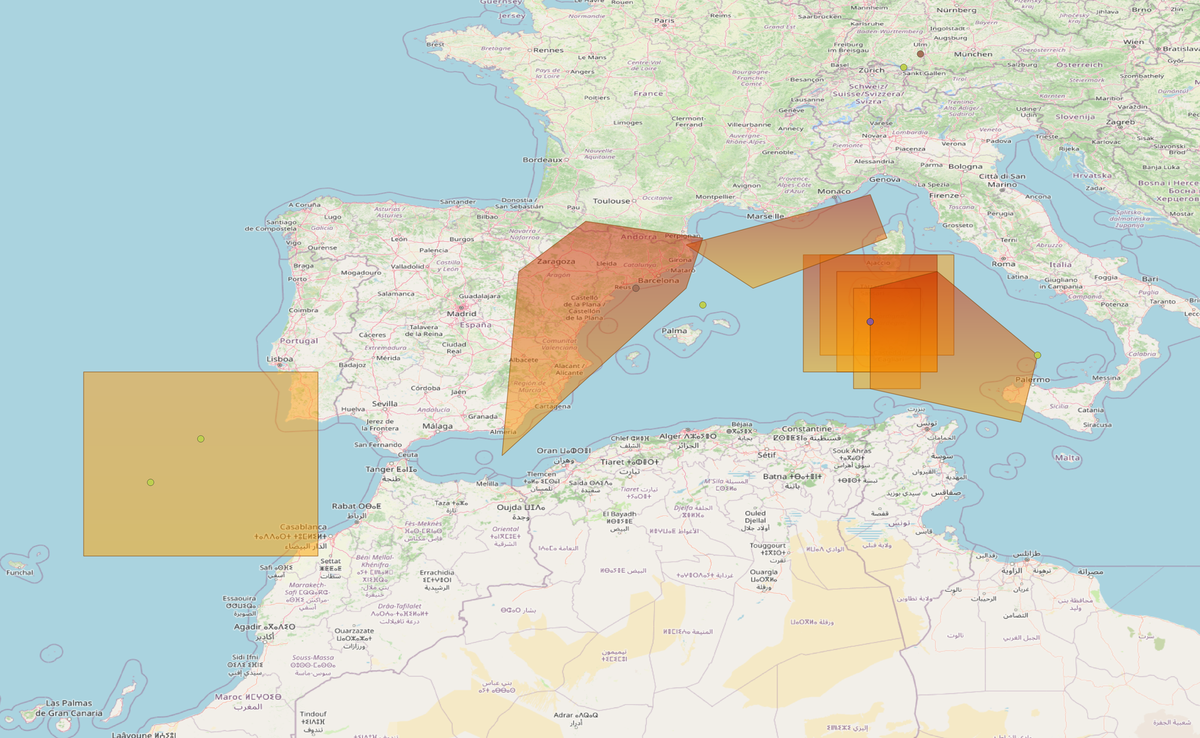
We are actively engineering a structural bottleneck across the European continental shelf. The current renewable pipeline boasts a staggering 129 GW of deployed intermittent capacity, yet we face severe, systemic grid saturation. Critical nodal intersections are operating at 75% saturation, leading to record curtailment of wind and solar assets. We are replacing dispatchable baseload generation with static, weather-dependent capacity, resulting in a grid physically incapable of absorbing its own production.
Lithium-ion Battery Energy Storage Systems (BESS) are essential for intraday frequency regulation, but they fundamentally cannot provide the multi-day, terawatt-scale baseload buffering required to stabilize a continental grid. The solution requires a paradigm shift from chemical storage on land to mechanical storage in the deep ocean.
However, moving from theoretical plausibility to commercial feasibility requires a brutal, forensic audit of our material and geopolitical limitations.
1. The Plausibility: Hydrostatic Physics as a Global Battery
The underlying physics of deep-sea energy storage is elegant and immutable. We utilize the ocean itself as the upper reservoir and a hollow concrete sphere on the seafloor as the lower reservoir.
The energy density is governed by the hydrostatic pressure equation:
$$P = \rho g h$$
At the target abyssal depths of 1,000 to 3,000 meters, the ocean provides a constant confining pressure of 10 to 30 MPa. A 30-meter diameter concrete sphere operating in this envelope can theoretically store roughly 20 MWh of energy.
The long-term durability of marine concrete under deep-ocean pressure is empirically proven. Between 1971 and 1985, the U.S. Naval Civil Engineering Laboratory (NCEL) deployed 18 hollow concrete spheres at depths up to 1,547 meters. Spheres retrieved after 10.5 years under sustained loading at 52% of implosion pressure showed absolutely no matrix degradation. In fact, the ocean-exposed concrete gained approximately 15% in compressive strength above its 28-day baseline.
2. The Feasibility Divide: Bridging the Abyssal Gaps
Extrapolating 1980s passive concrete tests to dynamic, cyclic energy infrastructure introduces massive structural unknowns. The Technology Readiness Level (TRL) for a full-scale 30-meter sphere at 1,000–3,000 meters remains stranded at TRL 2–4. Advancing IIIP requires bridging three distinct, universally binding constraints.
The Material Fracture: Pumped Hydro vs. Compressed Air
The most advanced operational analog today is Fraunhofer IEE’s StEnSea project, which operates on a pumped-hydro architecture at 700 meters. This design is critical because it keeps the 2.72-meter thick concrete wall strictly under external compression. Concrete handles compression natively, allowing the use of normal watertight concrete.
However, if an abyssal system utilizes Compressed Air Energy Storage (CAES) to maximize energy density, the internal air pressure introduces tensile hoop stresses. Concrete resists tension poorly; tensile creep failure occurs rapidly when sustained loads exceed 80% of ultimate tensile strength. To survive a CAES load case, the sphere would require steel lining, prestressing, or composite reinforcement, introducing immense manufacturing complexity.
Furthermore, while Ultra-High-Performance Concrete (UHPC) has been tested in short durations under 50 MPa of triaxial confinement , existing constitutive models for concrete deformation are explicitly "not applicable when hydrostatic stresses are high". Our available creep data extends 550 days in air, but we have zero validated data for water-saturated UHPC under sustained 10–30 MPa triaxial compression. Finally, autogenous self-healing concrete—critical for a 50-year structural lifespan—has currently only been validated up to 1.5 MPa. Extrapolating self-healing capabilities to 30 MPa is scientifically unjustified.
The Geotechnical Contradiction: The Sardinia Gap
Permanent deep-sea infrastructure requires exceptional tectonic stability. Applying seabed-adapted ground motion prediction equations reveals regions like the Gorringe Ridge and Horseshoe Abyssal Plain facing deterministic Peak Ground Acceleration (PGA) maxima exceeding 2.0 g.
Using the European Seismic Hazard Model (ESHM20), the Sea of Sardinia emerges as Europe’s only verified seismic-quiet basin at IIIP depths, recording a 475-year PGA below 0.03 g. However, this introduces the "Sardinia Gap": the optimal technical site sits precisely at the intersection of the Italian, French, and Spanish Exclusive Economic Zones (EEZs). The safest geological basin introduces the highest cross-border permitting complexity.
Even in seismically quiet basins, non-seismic geohazards present critical foundation risks. Substrates dominated by calcareous ooze are prone to diagenetic processes—brittle inter-particle cementation and dissolution—that can prime the seabed to fail and cause massive shear strength reduction over the sphere's 100-year design life.
Regulatory Homelessness
Current EU market frameworks are structurally onshore-biased. The UK’s Long-Duration Electricity Storage (LDES) cap-and-floor scheme recently shortlisted 77 projects; absolutely none were subsea. A systematic audit of 2026 EU funding calls returns zero direct matches for "Subsea Resilience," "Abyssal Energy," or "Hydrostatic Storage".
Subsea LDES suffers from regulatory homelessness—it is neither an electrochemical battery nor a traditional hydro plant. Yet, massive capital deployment precedents do exist. Repsol’s TarraCO2 project recently secured a €205 million EU Innovation Fund grant for offshore subsea CO₂ storage at depths exceeding 1,000 meters. This proves the capital and environmental permitting pathways exist if the technology is positioned correctly.
The IIIP Operational Blueprint
Breaking the Generation Paradox requires data-driven geospatial automation and scaled testing. The immediate path forward relies on a strict, three-stage workflow:
- Automated MCDA Screening: Utilizing a QGIS technical stack built on headless Python and GDAL, we must process EMODnet WFS/WCS endpoints across the continental shelf. The algorithm applies a four-layer suitability model:
$$S = 0.30 \cdot B + 0.20 \cdot C + 0.20 \cdot A + 0.30 \cdot T$$
(Where B = Bathymetry, C = Cable proximity, A = AIS shipping traffic, and T = Tectonic risk). A hard exclusion mask forces a zero-score for any pixel with a PGA >0.05 g or within 500 meters of submarine cables.
- Data Fidelity and Site Characterization: The EMODnet 115-meter bathymetric DTM is two to three orders of magnitude coarser than the 1-meter multibeam resolution required to identify local scarps that could compromise foundation stability. Therefore, 15–20% of any pilot funding allocation must be strictly ring-fenced for high-resolution Stage 3 geotechnical surveys.
- MRL Constraints and Scaling: A 30-meter solid concrete sphere approaches 20,000 tonnes, drastically exceeding the lift capacity of modern heavy-lift vessels and anchoring the Manufacturing Readiness Level at MRL 2–3. The immediate technical milestone must be commissioning a 1:3 scale (10-meter) test sphere at 1,500 meters to definitively map unknown constitutive deformation rates under 15 MPa.
The deep ocean offers the physical density required to stabilize our electrical future, but only if we have the forensic intelligence to engineer through abyssal pressures, geopolitical fault lines, and an absent regulatory framework.
Explore the spatial audit and the full technical manifesto here:https://maps.thelayeredgrid.com/IIIAbyssal_LDES_Intelligence_Platform.html
Comments ()