The Baseline Shift: Why the EU’s Imminent Geothermal Action Plan Redefines Grid Economics
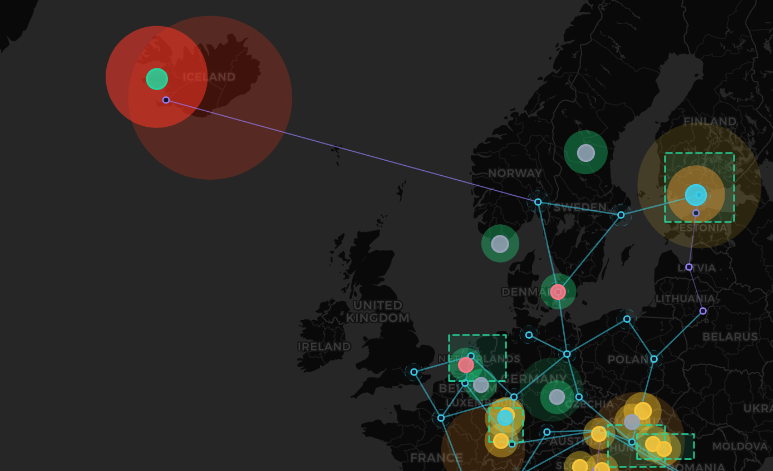
The European Commission is on the precipice of a fundamental policy pivot. In May 2026, the EU is expected to release its first-ever dedicated Geothermal Action Plan, marking a departure from a decade of energy strategy overwhelmingly dominated by variable renewable energy (VRE).
The scale of this pivot is staggering. A recent Ember report quantifies the continent's untapped potential: 43 GW of enhanced geothermal capacity can be developed at costs below €100/MWh. This highly competitive threshold means geothermal can reliably deliver 301 TWh annually—effectively replacing 42% of the EU’s entire fossil-fueled electricity generation. On April 10th, a broad coalition of industry leaders and civil society formally urged European regulators to seize this momentum before systemic permitting delays allow the commercial window to close.
With the European Geothermal Summit scheduled for June 4th, the Action Plan serves as the centerpiece of a much larger conversation. Geothermal is moving from niche pilot projects to macro-policy, and for grid planners, this changes the entire system flexibility calculus. Here is why the grid of the future demands firm heat.
The Physics of the Grid: The Inertia Deficit
The global transition toward a decarbonized power sector has precipitated a fundamental shift in grid architecture, replacing traditional centralized, synchronous generation with highly distributed, inverter-based resources (IBRs) such as wind and solar photovoltaics. While imperative for climate targets, this aggressive VRE deployment introduces profound challenges to system reliability and electrical stability.
Grid operators rely on physical synchronous inertia as the electrical grid's initial shock absorber during contingency events. Inertia is formally defined as the kinetic energy physically stored in the massive, heavy rotating components of synchronous generators. When system frequency drops, these turbines naturally release stored kinetic energy directly into the grid, dampening the Rate of Change of Frequency (RoCoF) and buying critical milliseconds for control systems to respond.
Wind and solar systems are IBRs; they do not inherently provide any physical synchronous inertia to the bulk power system. As older synchronous generators are retired, grids are becoming fundamentally more brittle. To artificially inject this lost "system strength" into high-VRE networks, operators are increasingly forced to procure multi-million-dollar synchronous condensers, which impose constant parasitic electrical loads on the grid.
Geothermal energy bypasses this entirely. It provides the exact same indispensable system strength, reactive power control, and physical rotational inertia as a completely free byproduct of generating reliable baseload electricity.
Rewriting the Flexibility Calculus
Historically, the geothermal sector has been strictly categorized as a rigid baseload resource, designed to run continuously at maximum output to rapidly amortize high upfront capital expenditures. This outdated misconception obscures the operational reality of modern facilities.
The contemporary grid requires highly flexible, dispatchable generation capable of executing rapid load-following to compensate for VRE forecast errors. Modern binary cycle Organic Rankine Cycle (ORC) geothermal units possess remarkable operational flexibility. These plants can ramp their electrical output up or down at a rapid rate of 15% to 30% of their nominal power per minute. Furthermore, they can seamlessly throttle their generation down to a minimum stable operating level of just 10% of their nominal power, scaling back to 100% capacity multiple times per day to accommodate extreme solar generation curves. In many operational scenarios, these plants can match or exceed the rapid ramping capabilities of traditional natural gas combustion turbines.
The Economic Fallacy of LCOE
For decades, utility-scale solar and onshore wind have appeared overwhelmingly dominant under the narrow lens of the Levelized Cost of Electricity (LCOE). However, grid operators and energy economists universally recognize that LCOE is a fundamentally flawed and dangerously misleading metric for assessing grids with high penetrations of variable renewable energy. LCOE measures only the isolated cost to produce energy at the plant gate; it completely ignores when that energy is produced, how reliable it is, and the massive ancillary costs imposed on the broader grid to integrate it.
To capture true macroeconomic costs, the industry is pivoting toward value-adjusted frameworks like VALCOE (Value-Adjusted LCOE) and LFSCOE (Levelized Full System Cost of Electricity). When integration costs are factored in, the economic landscape shifts dramatically.
The highest ultimate system value provided by geothermal energy is not found solely in the electricity it generates, but rather in the staggering infrastructure costs it avoids. Surviving multiday weather events with no wind or sun requires massive Long-Duration Energy Storage (LDES). Because geothermal is a reliable 24/7/365 resource, its integration directly precludes the need for these exorbitant bulk battery storage investments. In advanced grid decarbonization models, 1 MW of geothermal baseload capacity can reliably displace the equivalent of 4 to 5 MW of combined solar PV and battery storage capacity.
The Window of Opportunity
The upcoming May Action Plan is not just a regulatory update; it is an acknowledgement of grid physics. An electron provided reliably, predictably, and with physical inertia at 8:00 PM during peak grid stress is vastly more valuable to the survival of the system than a surplus electron curtailed and wasted at high noon.
As Europe targets 43 GW of deployment, unlocking this capacity will require immediate action to streamline permitting, mitigate subsurface geological risk, and intelligently integrate these assets into regional networks. Geothermal energy delivers precise, unyielding value. For grid planners and policymakers alike, the transition from pilot to policy cannot happen soon enough.
I’ve mapped out these critical infrastructure intersections. You can explore the interactive spatial data here:
https://maps.thelayeredgrid.com/GEOTHE~1.HTM
Grid physics don't care about your nameplate capacity.
We judge energy by how much a plant can theoretically produce. That is the wrong metric. Grid operators care about what a plant will actually produce at 6:00 PM on a Tuesday in July. Keeping a regional grid stable is a constant balancing act. You need power you can control.
The Operator's Reality
Before comparing sources, look at what grid stability demands. You cannot run a modern grid on intermittent energy alone.
Ramping Requirements
The grid needs power sources that can scale up fast when demand spikes or when the sun sets.
Curtailment Reality
Sometimes you generate too much power. Operators are forced to shut off perfectly good solar panels because the local grid cannot handle the midday surge.
Physical Inertia
Heavy, spinning metal turbines keep the grid frequency stable. Solar panels do not spin. Geothermal plants do.
The Variability Problem in Action
Solar and wind are cheap to build. They are also entirely at the mercy of the weather. Look at a grid like California's CAISO. Solar floods the system at noon. Prices drop to zero or turn negative. Then the sun sets. Demand spikes as everyone gets home. The grid scrambles for gigawatts of dispatchable power in less than three hours.
Capacity Factor is Reality
Nameplate capacity is marketing. Capacity factor measures actual average output versus maximum potential output over a year. A 100-megawatt solar farm rarely operates at 100 megawatts.
Geothermal is not weather-dependent. It pulls heat directly from the earth. It runs constantly. You get a flat, predictable line of power generation. A 100-megawatt geothermal plant gives you 90 megawatts around the clock. That is what grid operators actually want to buy.
The True Cost of Intermittency
When you build a wind or solar farm, the generation hardware is only part of the system cost. To make variable power act like baseload power, you have to add massive battery storage or keep natural gas peaker plants on standby. Geothermal requires zero external firming.
Requires expensive lithium-ion battery arrays to shift midday overproduction to evening peak hours.
Highly seasonal. Drops off during extreme heat and extreme cold events when grid demand is highest.
Requires zero firming costs. The heat source acts as its own infinite, built-in battery.
System Value Comparison: Raw Generation vs Grid Firming
Adding batteries or standby gas plants to make variable renewables reliable heavily inflates the true cost of delivering a stable megawatt-hour to the grid.
Comments ()