Geothermal Isn’t a Climate Story. It’s an Industrial Strategy.
If the first three parts were about geology, policy, and economics - this one is about execution. Because geothermal doesn’t fail due to physics. It fails due to organization.
For decades, Europe treated geothermal as a niche curiosity:
• Too risky
• Too slow
• Too capital-intensive
• Too uncertain underground
Meanwhile, wind and solar scaled rapidly - modular, visible, politically rewarding. But geothermal is different. It isn’t a generation technology.
It’s subsurface infrastructure. And infrastructure demands industrial discipline.
Drilling Capacity Is the Real Bottleneck
You don’t scale geothermal with subsidies alone. You scale it with:
• Deep drilling rigs
• Directional drilling expertise
• Mud systems and high-temperature materials
• Logging tools and reservoir interpretation
• Crews that understand pressure, fracture behavior, and long-term well integrity
This is not startup culture. This is oil & gas competence. Europe spent 30 years shrinking that capability. Now it wants dispatchable heat and stable baseload without hydrocarbons.
That mismatch is structural.
If drilling capacity becomes constrained, projects stall - regardless of policy ambition.
Geothermal growth will depend less on political will and more on whether Europe rebuilds subsurface engineering depth.
Geological Risk Must Be Structured - Not Ignored
Wind risk: permitting delays. Solar risk: price volatility. Battery risk: material supply chains.
Geothermal risk: what is actually 3–5 km below you. The first well determines everything. That means scaling requires:
• Exploration-phase risk insurance
• State-backed drilling guarantees
• Shared geological databases
• Portfolio development models instead of single-site bets
If governments want geothermal at scale, they must de-risk early exploration - not just subsidize successful production.
The countries that understood this built momentum. Those that didn’t treated every project as an isolated experiment.
Geothermal is not high risk. Unstructured geothermal is.
Heat - Not Electricity - Is the Strategic Lever
Electricity dominates headlines. Heat dominates dependency.
In Northern Europe, industrial processes and residential heating still rely heavily on gas. Replacing electricity generation is important. Replacing imported gas for district heating is transformative. Geothermal doesn’t need to compete with wind on LCOE to matter.
It needs to anchor district heating networks with:
• Predictable output
• 24/7 availability
• Low marginal cost
• Long operational life
That is industrial stability. And stability is undervalued in energy debates.
Reservoir Management Is a Long-Term Discipline
Geothermal is not “drill and forget.” It requires:
• Pressure monitoring
• Reinjection optimization
• Thermal drawdown modeling
• Decade-long reservoir management strategies
Operators, not developers, win here. Short-term thinking degrades fields. Long-term discipline sustains them for generations.
That culture shift - from project mindset to asset mindset - is where Europe must mature.
Industrial Strategy vs. Energy Optics
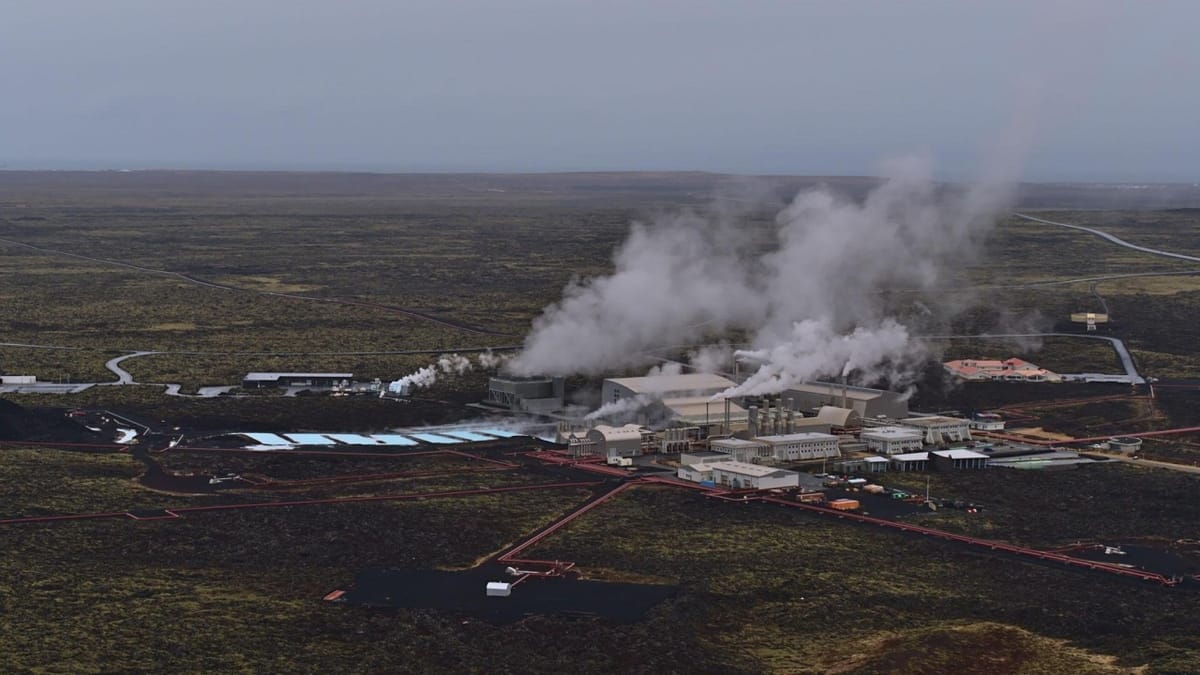
Wind farms are visible. Solar parks photograph well. Geothermal mostly looks like pipes and steam. But energy sovereignty is not about aesthetics. It’s about controllable infrastructure. If Europe is serious about:
• Reducing gas imports
• Stabilizing heating costs
• Strengthening grid resilience
• Rebuilding industrial capability
Then geothermal is not a climate accessory.
It is a strategic lever.
The Real Question
If the goal is energy independence, why ignore the only renewable that behaves like infrastructure?
Wind and solar reduce imports. Geothermal can structurally replace them in heating systems.
That difference matters.
If Northern Germany builds:
• Drilling capacity
• Risk-sharing frameworks
• District heating expansion
• Subsurface engineering depth
It won’t just add renewable capacity. It will build industrial resilience.
And resilience - not megawatts - is the real currency of the next energy phase.
Comments ()