Beyond the Heat: Why the EU Geothermal Action Plan is a Grid Stability Imperative
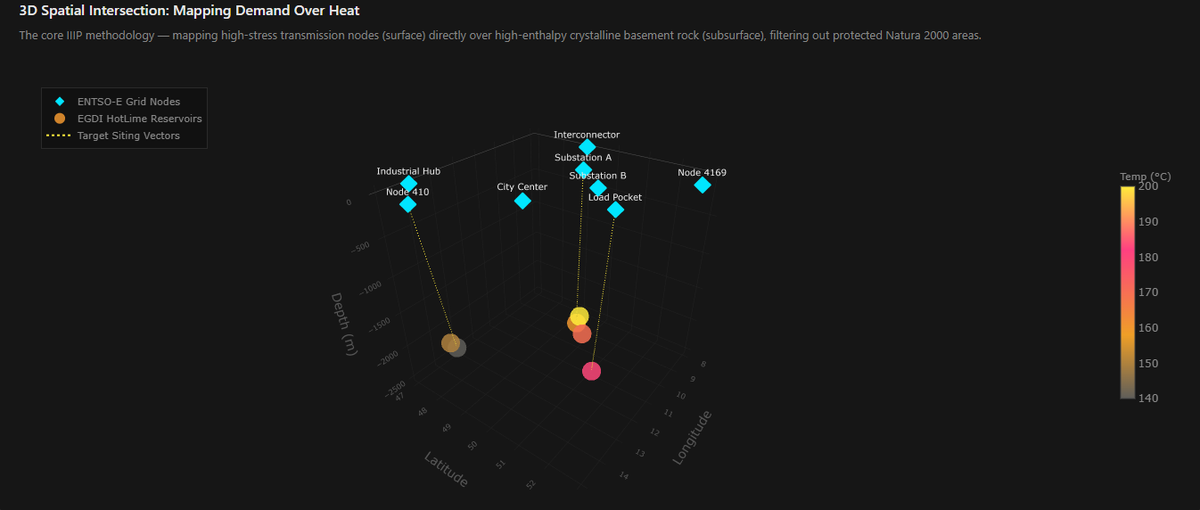
The European energy landscape sits at a precarious crossroads. As the European Commission prepares to release its Geothermal Action Plan in May 2026, a fierce policy battle is unfolding. At stake is whether geothermal energy is viewed merely as a local heating alternative or as the backbone of a stable, resilient European power grid.
The 2025 Warning Shot: A Crisis of Stability
On April 28, 2025, the Iberian Peninsula suffered one of the most severe blackouts in European history. While some media outlets blamed high solar penetration, official investigations by ENTSO-E revealed a deeper structural vulnerability: a voltage control failure and a lack of dynamic reactive power.
At the moment of collapse, solar was providing 59% of Spain's electricity, but the grid lacked the synchronous generation necessary to maintain system strength. Geothermal plants, utilizing physical rotating masses in synchronous generators, provide the exact services that failed that day - inertia, fault current contribution, and continuous voltage regulation.
The Policy Fork: May 2026
A coalition of over 60 industry leaders and investors issued a stark warning in April 2026: if the Commission focuses too narrowly on heat, Europe will miss the "Geothermal Revolution".
- The Heating Framing: Routes through building codes and national environmental ministries.
- The Grid Stability Framing: Routes through ENTSO-E and market design, unlocking budgets for "system strength" and "firm power".
For IIIP (Industrial Infrastructure Intelligence), the choice is clear: the most valuable sites are not just where the heat is, but where the grid is under the most stress.
The Economic Shift: Baseload is the New Premium
As solar and wind penetration increases, "Capture Factors" - the market price received by renewables compared to the average baseload price - have collapsed to 50-60% in Germany, Spain, and France. Europe saw over 9,000 hours of negative prices in 2025 alone.
Consequently, Baseload PPAs (Power Purchase Agreements) now command a 20-25% premium. Large-scale energy consumers, particularly data centers, are pivoting toward geothermal because it provides "Firm Power" without the need for massive, expensive battery storage.
| Grid Service | Geothermal (Synchronous) | Solar/Wind (Inverter-based) |
| Inertia | Physical rotating mass (4-9s) | Zero (unless synthetic) |
| Voltage Support | Dynamic reactive power control | Static; limited |
| Fault Current | High (6-10x rated) | Very low |
| Availability | 24/7 (80-90%+ capacity) | Variable (weather dependent) |
Auditing the 43 GW "Techno-Economic" Claim
A February 2026 report from Ember highlighted that 43 GW of geothermal could be developed in the EU at under €100/MWh. If deployed, this could replace 42% of the EU’s coal and gas generation.
However, this figure represents a "theoretical upper bound". Academic counter-analysis suggests EGS (Enhanced Geothermal Systems) requires roughly 60% drilling cost reductions to be truly competitive in electricity markets. While NREL reports drilling cost improvements of 12-26% in recent years, we are still far from the "shale-equivalent" revolution seen in the United States.
The IIIP Strategy: Infrastructure-Aware Siting
To scale geothermal in mainland Europe, we cannot simply copy the Icelandic Model. Iceland’s success is built on unique volcanic geology and isolated baseload demand from aluminum smelters - conditions that don't exist in the interconnected EU market.
Instead, European deployment must focus on Infrastructure-Aware Siting. This means:
- Siting for Grid Relief: Placing synchronous geothermal plants in "Grid Stress Areas" to destroy the congestion premium.
- De-risking the "Dry Hole": Adopting national schemes like Germany’s €600 million KfW/Munich Re drilling guarantee to pull in private capital.
- Dual-Revenue Streams: Combining electricity generation with mineral extraction (e.g., Lithium) to make projects bankable even at higher LCOEs.
Conclusion
The May 2026 Action Plan must be bolder than its predecessors. It needs explicit targets for geothermal electricity - at least 5 GW by 2035 - to signal that Europe is serious about grid stability. We don't just need a heating alternative; we need a "Grid Stability Imperative" that values geothermal for the unique, synchronous strength it provides to a failing transmission system.
Explore the Interactive Grid Intelligence Map here: 🔗https://maps.thelayeredgrid.com/IIIP_Geothermal_Action_Plan.html
Comments ()