The Engineering Reality of the Aragon Bottleneck.
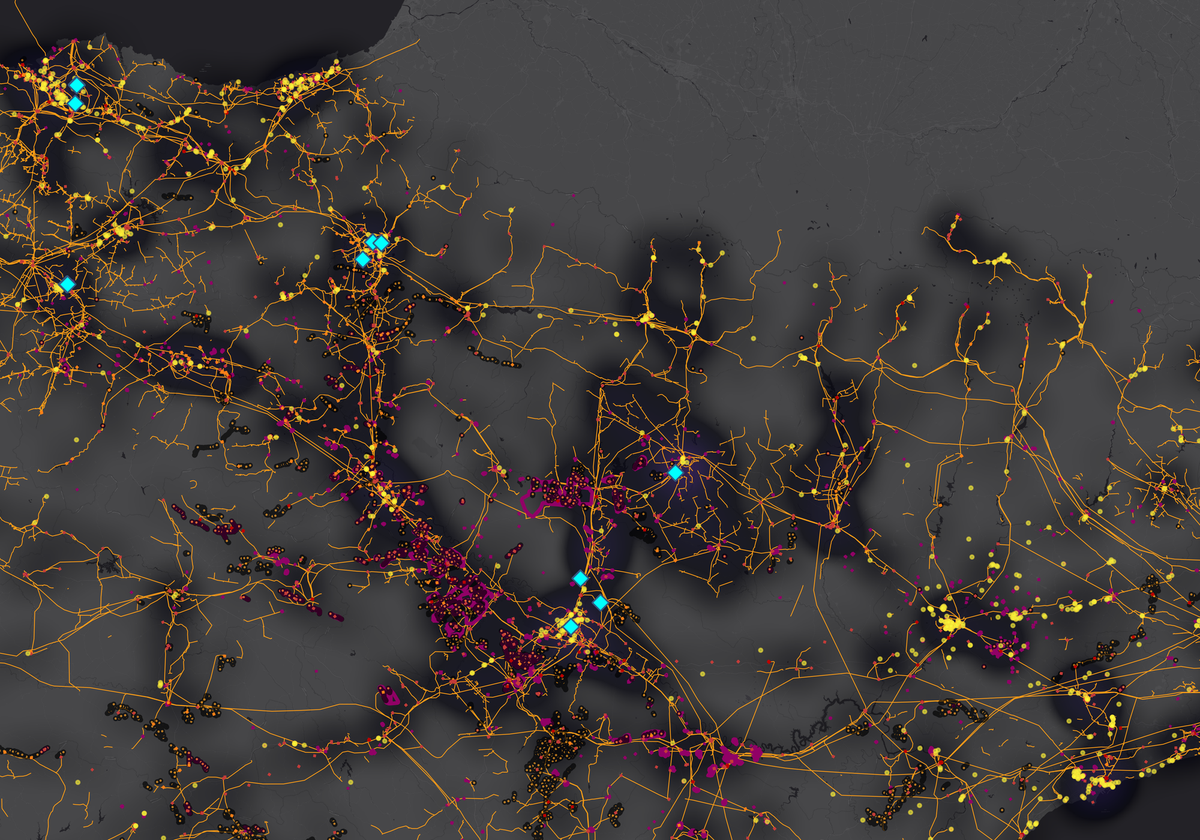
Hydrological Stress, Resource Allocation, and Regulatory Friction: An Analysis of Tier 4 Data Center Infrastructure in the Ebro River Basin
Hydrological Friction in the Ebro Basin
Analyzing water rights allocation, structural scarcity, and the regulatory roadblocks for Tier 4 Data Center evaporative cooling in Zaragoza province.
The Convergence of Tech and Drought
Zaragoza has rapidly emerged as Southern Europe's premier cloud infrastructure hub. However, the region is simultaneously facing structural deficits in the Ebro River basin. Tier 4 data centers rely heavily on evaporative cooling systems, which consume millions of liters of water annually. This intersection is creating unprecedented regulatory friction, forcing municipalities to weigh industrial expansion against vital local water security.
Ebro Basin Resource Allocation
Current allocation of hydrological resources governed by the Confederación Hidrográfica del Ebro (CHE). Industrial expansion must fit within an already hyper-allocated framework dominated by agriculture.
Zaragoza Hydrological Stress Index
The basin's capacity to meet demand versus available supply. An index above 80 indicates severe friction for new high-volume concessions.
The Evaporative Cooling Reality
A standard 50MW Tier 4 Data Center utilizing evaporative cooling can consume up to 1.5 million liters of water per day during peak summer temperatures in Aragon. Compare this to local municipal usage.
50MW Data Center (Peak Summer)
Municipality of 10,000 Residents
Regulatory Permitting Friction
Securing new industrial water rights in Aragon is no longer a formality. It is a multi-year, multi-agency bottleneck prioritized by environmental impact.
Phase 1: CHE
Confederación Hidrográfica del Ebro evaluates basin capacity and existing agricultural rights.
Phase 2: INAGA
Environmental Impact Assessment (EIA) focusing on aquifer depletion and effluent discharge.
Phase 3: Municipal
Local city council urban licensing. Increasing public pressure to deny heavy water users.
Municipalities Halting/Restricting Development
Severity index of local opposition and regulatory halting for new data center projects due to direct water scarcity concerns (Scale: 1-10).
1. Introduction and Macroeconomic Context
The intersection of digital infrastructure expansion and natural resource scarcity has emerged as one of the most critical socio-environmental and regulatory challenges of the twenty-first century. As the hyperscale data center industry rapidly outgrows the saturated "FLAP" markets (Frankfurt, London, Amsterdam, and Paris) due to severe land scarcity and electrical grid constraints, the Iberian Peninsula has become a primary focal point for global digital investment. The Aragon region, particularly the Zaragoza province, is currently undergoing an unprecedented macroeconomic transformation. Driven by its strategic geographic location, abundant renewable energy penetration, and the aggressive facilitation of fast-track governmental zoning instruments, Aragon has attracted an estimated €33 billion to €47 billion investment pipeline from major technology conglomerates. This expansion aims to position Aragon as the third-largest data center hub in Europe.
However, this rapid, large-scale industrialization relies heavily on evaporative cooling technologies to maintain the stringent thermal parameters required by high-density, artificial intelligence (AI) computing. These cooling systems demand exceptional volumes of continuous water supply, placing the burgeoning digital economy in direct, systemic competition with traditional agricultural operations and urban water networks. The Ebro River basin, which sustains over three million inhabitants and approximately 780,000 hectares of irrigated agricultural land, is already categorized as one of the most highly stressed hydrological systems in Southern Europe. Furthermore, roughly 75% of the Spanish territory is currently classified as being at a high risk of desertification, amplifying the profound ecological stakes of introducing new, inflexible, high-volume industrial water consumers into the region.
This comprehensive report provides an exhaustive technical, environmental, and regulatory analysis of the current hydrological stress levels within the Ebro River basin, with a specific focus on the Zaragoza province. It investigates the hierarchical water rights allocation framework administered by the Confederación Hidrográfica del Ebro (CHE) and examines the complex environmental regulations governing industrial-scale water usage. Specifically, the analysis focuses on the permitting friction surrounding Tier 4 data centers utilizing evaporative cooling systems. Finally, the report evaluates the rising socio-political resistance at the municipal level, analyzing instances where local governments and civil society organizations in Aragon are actively challenging, litigating, and attempting to halt industrial development due to severe water scarcity and infrastructure concerns.
2. Hydrological Stress Profiling of the Ebro River Basin
The Ebro River basin encompasses a drainage area of 85,611 square kilometers, representing approximately one-fifth of the Spanish territory, and constitutes the most voluminous streamflow network in the country. Despite its vast geographical expanse, the basin is characterized by extreme spatial and temporal hydrological variability. Precipitation in the Pyrenean headwaters routinely exceeds 1,000 millimeters annually, whereas the central basin, encompassing the Zaragoza province, experiences strict semi-arid conditions with annual precipitation rarely exceeding 350 millimeters.
2.1. Current Hydrological Indicators and Short-Term Dynamics
As of the close of the first quarter of 2026, the short-term hydrological indicators published by the CHE present a seemingly stable baseline that masks underlying volatility. The official drought and scarcity report for March 31, 2026, indicated a state of "Normalidad" (Normality) for short-term scarcity across all territorial units, with no units officially classified under prolonged drought conditions. Real-time telemetry from the Automatic Hydrological Information System (SAIH) at the A011 Ebro Zaragoza gauging station recorded a water level of 1.13 meters and a flow rate of 137 cubic meters per second on April 18, 2026.
This immediate stability is partly attributable to the basin's extensive network of reservoirs, which possess a massive aggregate storage capacity designed to regulate inter-annual variability and buffer against seasonal deficits. Furthermore, structural river management initiatives, such as the Ebro Resilience Strategy, have actively reshaped the river's hydrology in the Zaragoza province to mitigate the impacts of extreme weather events. Recent interventions—including the completion of Sections 7 (Alcalá de Ebro-Remolinos-Luceni) and 9 (Torres de Berrellén-Sobradiel) with a budget of €4.6 million—have focused on removing obsolete defense dikes and recovering natural floodplain areas to increase drainage capacity. In the Osera de Ebro to Fuentes de Ebro section, 23 hectares of fluvial space have been reclaimed to act as "water cushions" during extreme flood events.
|
Hydrological
Indicator |
Status
/ Measurement (Q1-Q2 2026) |
Regional
Context |
|
Prolonged
Drought Index |
Normalidad
(Normality) |
Zero
territorial units in active drought as of March 31, 2026. |
|
Short-Term
Scarcity |
Normalidad
(Normality) |
Baseline
stability supported by winter precipitation and snowmelt. |
|
Zaragoza
Streamflow (A011) |
137
m³/s |
Recorded
via SAIH telemetry on April 18, 2026. |
|
Zaragoza
Water Level |
1.13
meters |
Stable
nominal flow within the urban Zaragoza channel. |
|
Flood
Resilience Strategy |
Active
Implementation |
23
hectares recovered in Osera-Fuentes; €4.6M invested in Sections 7 & 9. |
2.2. Advanced Hydro-Economic Modeling and Long-Term Structural Deficits
However, interpreting the current "Normalidad" as an indicator of long-term resource security represents a profound analytical fallacy. The underlying structural hydrology of the Ebro basin is steadily deteriorating due to the compounding variables of anthropogenic climate change, rural depopulation, and fundamental land-use shifts.
Advanced hydro-economic modeling utilizing SWAT+ (Soil and Water Assessment Tool) operating at a daily time step indicates a consistent future decrease in streamflow across the northern sector of the Ebro basin. The widespread natural revegetation of mountainous areas, driven by agricultural abandonment, has altered runoff generation and infiltration rates, effectively capturing precipitation in biomass before it can reach the main tributaries. When combined with statistically downscaled climate projections utilizing the NEX-GDDP-CMIP6 dataset and bias correction through Empirical Quantile Mapping (EQM), the models forecast severe reductions in overall basin yield and heightened sediment transport disruptions.
To accurately capture the probabilistic risk of extreme events, recent hydrological simulations have employed Clayton copula procedures—an asymmetric statistical model designed to capture lower tail dependence in consecutive monthly water inflows. These models project future climate water stress conditions characterized by droughts of significantly greater intensity and duration than historical baselines. Consequently, while the immediate surface water availability in Zaragoza may support current extractions, the long-term structural deficit indicates that the basin is operating near the absolute limits of its sustainable carrying capacity. The introduction of permanent, high-volume industrial consumers into this fragile equilibrium fundamentally alters the basin's resilience profile, elevating the probability of severe resource contention.
3. The Regulatory Architecture of Water Rights Allocation
The administration of water resources in the Ebro basin is governed by the Confederación Hidrográfica del Ebro (CHE), established in 1926 as the first institution in the world designed to manage an entire river basin in a unitary, integrated manner. The CHE operates under the principle of basin unity, managing both surface water and groundwater as a highly integrated, singular resource subject to the public interest.
3.1. The Statutory Hierarchy of Water Uses
The allocation of water rights in Spain is strictly dictated by the 1985 Water Law (Ley de Aguas) and the successive basin-specific Hydrological Plans. This legal architecture establishes a rigid hierarchy of uses, which dictates the priority of supply during periods of scarcity and serves as the foundational framework for evaluating new concession applications.
|
Priority
Rank |
Category
of Water Use |
Description
and Basin Context |
|
1 |
Urban
Water Supply |
Provision
of potable water to municipalities. Absolute priority; legally protected from
standard curtailments. |
|
2 |
Irrigation
and Agriculture |
Dominant
consumptive use in the Ebro basin (approx. 90% of total withdrawals), serving
roughly 780,000 hectares. |
|
3 |
Industrial
for Energy Production |
Non-consumptive
or low-consumptive cooling for thermal, nuclear, and hydroelectric power
generation. |
|
4 |
Other
Industrial Uses |
Includes
manufacturing, processing, and hyperscale data center cooling systems. |
|
5 |
Aquaculture |
Water
utilization for commercial fish farming and aquatic production. |
|
6 |
Recreational
Uses |
Tourism
infrastructure, golf courses, and municipal non-essential landscaping. |
|
7 |
Navigation
& Other |
River
transport, boating, and minor miscellaneous extractions. |
Source Data: CHE Plan Hidrológico and Ley de Aguas.
Furthermore, the implementation of the European Water Framework Directive (WFD) has superimposed the concept of "ecological flows" (e-flows) over this socio-economic hierarchy. Ecological flows act as a baseline restriction; they are not legally considered a "use" but rather a fundamental systemic constraint that must be satisfied before any consumptive allocations are granted, with the sole exception of critical urban supply in extreme emergencies.
3.2. Implications for Industrial Data Centers and Socio-Economic Costs
The classification of hyperscale data centers under the fourth tier ("Other Industrial Uses") creates profound operational risks for digital infrastructure developers. Within the Ebro basin, agricultural withdrawals account for approximately 7,680 cubic hectometers (hm³) annually, representing 90% of the basin's total consumptive demand. The economic dynamics of this allocation are highly sensitive. Advanced multi-regional input-output models estimate that the opportunity cost of reallocating just 1 hm³ of blue water away from productive sectors in the Ebro basin equates to an average loss of €41,500 in value-added economic activity, with severe localized impacts on rural municipalities that depend on agrarian economies.
Under the Special Drought Plan (Plan Especial de Sequía - PES), the CHE is empowered to implement progressive supply curtailments based on the severity of the drought index (Pre-Alert, Alert, Emergency). Because general industrial uses rank below agriculture, data centers face the statutory risk of severe water rationing during a declared "Sequía Extraordinaria" (Extraordinary Drought), a condition triggered when alert or emergency scenarios coincide with prolonged drought indicators for at least two months. The operational inflexibility of data center cooling demand—which must operate continuously to prevent catastrophic hardware failure—is inherently incompatible with an allocation hierarchy designed to prioritize food security and human consumption during extreme climatic variations.
4. Tier 4 Data Centers and Evaporative Cooling Dynamics
The technical specifications of the data centers currently being deployed or proposed in the Zaragoza province further exacerbate this resource conflict. Modern hyperscale facilities, particularly those engineered to process computationally intensive Artificial Intelligence (AI) workloads, are predominantly built to Tier 4 standards, the highest classification designated by the Uptime Institute.
4.1. Tier 4 Infrastructure Tolerances and Redundancy Mandates
A Tier 4 data center is defined as a fully fault-tolerant facility with an expected availability of 99.995%, equating to a maximum allowable annual downtime of merely 26.3 minutes (or 0.4 hours). To achieve this unprecedented level of reliability, the infrastructure must feature multiple, independent, and physically isolated systems that provide redundant capacity components—a topology formally known as 2N+1.
In the context of thermal management, Tier 4 standards dictate that cooling systems must have multiple active distribution paths and absolute fault tolerance. If the primary municipal water supply fails, or if the CHE imposes statutory curtailments due to drought, the facility must have immediate access to an alternative cooling medium or water source to maintain operations seamlessly. This stringent requirement forces developers to secure secondary water rights, drill high-capacity groundwater extraction wells into local aquifers, or construct massive on-site storage reservoirs (storm tanks), drastically intensifying the localization of their environmental footprint and generating acute friction with local stakeholders.
|
Tier
Classification |
Availability
Guarantee |
Annual
Permitted Downtime |
Redundancy
Topology and Characteristics |
|
Tier
I |
99.671% |
28.8
hours |
No
redundancy. Vulnerable to planned and unplanned interruptions. Single path
for power and cooling. |
|
Tier
II |
99.741% |
22.0
hours |
N+1
redundancy in some critical systems. Reduced risk but still susceptible to
major failures. |
|
Tier
III |
99.982% |
1.6
hours |
N+1
redundancy. Concurrently maintainable without downtime. Multiple paths for
power and cooling. |
|
Tier
IV |
99.995% |
0.4
hours (26.3 mins) |
2N+1
redundancy.
Fully fault-tolerant. No single points of failure. Multiple active
distribution paths for power and cooling. |
4.2. Thermodynamics of Evaporative Cooling Systems
To manage the immense thermal loads generated by high-density servers, operators predominantly utilize evaporative cooling systems (often referred to as swamp cooling or wet cooling towers). In these systems, hot ambient air from the server exhaust is drawn across water-saturated media; the latent heat of vaporization absorbs the thermal energy, effectively cooling the facility while lowering the electricity required for mechanical chilling.
While evaporative cooling is highly energy-efficient—significantly reducing the Power Usage Effectiveness (PUE) metric compared to traditional mechanical air conditioning—it is extraordinarily water-intensive. The thermodynamic reality of evaporative cooling dictates that up to 85% of the water withdrawn is lost entirely to the atmosphere as vapor, rendering it a highly consumptive industrial use. The remaining 15% to 20% of the water, known as "blowdown," becomes highly concentrated with dissolved solids, minerals, and chemical treatment agents (utilized to prevent legionella bacteria and scaling). This blowdown must be discharged into the municipal wastewater system or treated extensively on-site to comply with strict environmental discharge regulations, adding another layer of regulatory complexity.
4.3. Direct vs. Indirect (Secondary) Water Consumption
The true hydrological footprint of these facilities extends far beyond the direct water evaporated on-site for cooling. The operations are highly electricity-intensive, and the generation of that electricity—particularly from thermal, nuclear, or certain hydroelectric sources—requires massive amounts of cooling water at the power plant level. This indirect consumption, often termed "secondary water use," accounts for an estimated 75% of a data center's total water footprint.
Consequently, the Water Usage Effectiveness (WUE)—the ratio of direct water consumed to IT electricity used—only captures a fraction of the actual resource drain. During the summer months in Zaragoza, when ambient temperatures soar and evaporative cooling systems run at maximum capacity, the localized water draw spikes precisely when the Ebro basin experiences maximum hydrological stress and agricultural demand is at its zenith. An average 100-megawatt data center utilizing evaporative cooling can directly consume between one and five million gallons of water daily, a figure that multiplies when accounting for secondary power generation.
5. Environmental Regulations and Permitting Friction in Aragon
The massive influx of capital into the Aragonese digital sector has collided with a rapidly evolving, increasingly stringent regulatory environment at both the European and national levels. The permitting process, historically viewed as an administrative formality, has transformed into the primary friction point for infrastructure deployment, with water rights and environmental compliance functioning as deal-breaking constraints.
5.1. Transposition of the EU Energy Efficiency Directive
The European Union, recognizing the escalating environmental toll of digitalization, updated the Energy Efficiency Directive (Directive (EU) 2023/1791) to mandate greater transparency and sustainability. In response, the Spanish Ministry for Ecological Transition and the Demographic Challenge (MITECO) introduced a Draft Royal Decree (Draft RD) in August 2025 to transpose and significantly expand upon the European mandates.
The Spanish Draft RD imposes exceptionally rigorous sustainability requirements on the data center industry, categorized by power capacity:
- Mandatory Annual Reporting (Article 4): Operators of facilities with an IT power demand of 500 kW or more must submit an annual notification by May 15. This comprehensive report must explicitly detail energy use, IT capacity, data traffic, and absolute water consumption. Furthermore, companies must submit a detailed socioeconomic impact assessment and a strategy to minimize environmental degradation.
- Waste Heat Recovery (Article 5): Facilities exceeding 1 MW must implement Waste Heat Recovery (WHR) systems—such as utilizing Organic Rankine Cycles (ORC) to generate secondary electricity or supplying local district heating—unless a rigorous cost-benefit analysis proves it technically or economically unfeasible.
- Best-in-Class Performance (Article 6): Hyperscale facilities exceeding 100 MW are subject to an unprecedented benchmark: they must legally demonstrate that their Power Usage Effectiveness (PUE), Water Usage Effectiveness (WUE), Energy Reuse Factor (ERF), and Renewable Energy Factor (REF) rank within the top 15% of the European sector's performance.
- Grid Access Conditionality (Article 7): Crucially, the Draft RD explicitly links environmental compliance to electrical infrastructure. The granting of permits for access and connection to the national electricity grid is strictly conditional upon verified compliance with the aforementioned water, energy, and heat reuse obligations.
5.2. INAGA and the Autonomic Permitting Bottleneck
In the autonomous community of Aragon, the environmental permitting process is overseen by the Instituto Aragonés de Gestión Ambiental (INAGA). Data centers require an Autorización Ambiental Integrada (AAI - Integrated Environmental Authorization) and a comprehensive Evaluación de Impacto Ambiental (EIA - Environmental Impact Assessment).
The classification of these massive projects often triggers rigorous scrutiny. For instance, the external hydraulic infrastructure required to supply the Amazon Web Services (AWS) expansion in Zaragoza and El Burgo de Ebro involved water conductions exceeding 10 kilometers in non-urban soil, subjecting the project to the strictest tiers of the Environmental Assessment Law 21/2013 (Annex II, Group 8).
INAGA must balance the directives of the regional government—which frequently declares these developments as "Proyectos de Interés General de Aragón" (PIGA) to expedite zoning and bypass standard municipal planning—with strict environmental protection laws. The friction arises when INAGA and the CHE evaluate the cumulative impact of water extraction. While the CHE is responsible for granting the actual water concession for industrial uses exceeding 5 liters per second , INAGA evaluates the holistic environmental footprint, including the thermal pollution and chemical discharge of the highly concentrated blowdown water from the cooling towers. If a facility relies on backup groundwater to satisfy Tier 4 redundancy requirements, INAGA and CHE must assess the potential drawdown of the local water table, a highly contentious issue that places digital infrastructure in direct conflict with the vested interests of local agrarian communities.
5.3. Corporate Lobbying and the Aarhus Convention Transparency Conflict
Complicating the regulatory landscape is a fierce lobbying battle over corporate transparency. An international investigation revealed that major tech conglomerates, operating through the lobby group DigitalEurope, successfully pressured the European Commission to insert a confidentiality clause into the implementing regulation of the EU Energy Efficiency Directive. This secrecy provision permits national authorities to classify specific facility-level water and energy data as commercially sensitive trade secrets, shielding the exact environmental footprint of individual data centers from the public, researchers, and journalists.
Leading environmental legal scholars argue this secrecy provision directly violates the EU's obligations under the Aarhus Convention, an international treaty guaranteeing public access to environmental information. In Aragon, this state-sanctioned lack of transparency has severely degraded public trust. Citizens and municipal leaders are forced to rely on aggregate estimates or leaked documents, fueling widespread suspicion that the true hydrological toll of the data centers is being deliberately obscured to prevent regulatory pushback and civic unrest.
6. Corporate Expansion vs. Regional Constraints: The Aragon Hub
Aragon's ascent as a premier digital hub is spearheaded by the massive expansion of Amazon Web Services (AWS), alongside major hyperscale investments from Microsoft, Vantage, Box2Bit, and Azora Capital. The sheer scale of these deployments presents an unparalleled challenge to the region's resource management and political stability.
|
Project
/ Operator |
Location
in Aragon |
Estimated
Investment |
Current
Status / Water Friction Notes |
|
Amazon
Web Services (AWS) |
Villanueva
de Gállego, El Burgo de Ebro, Huesca |
€15.7
Billion+ |
48%
water increase requested. PIGA approved. High municipal resistance. |
|
Microsoft |
La
Muela, Villamayor de Gállego, Zaragoza |
€6.6
Billion+ |
Implementing
"zero water" cooling models. DIGA granted. |
|
Vantage |
Villanueva
de Gállego |
€3.2
Billion |
Projected
to consume 5,000 m³ of water. DIGA contested by local environmental groups. |
|
Azora
Capital |
Villamayor
de Gállego |
€1.1
Billion |
DIGA
appealed by the local municipality due to water and agricultural land
impacts. |
|
Box2Bit |
Cariñena,
Calatayud |
€3.4
Billion+ |
Focus
on renewable self-consumption. Early stages of planning. |
6.1. The AWS Expansion and the 48% Augmentation Petition
Amazon currently operates three existing data centers in the region and has announced the development of three additional hyperscale facilities, physically adjacent to the current sites in Villanueva de Gállego, El Burgo de Ebro, and Huesca. These proposed centers are licensed to consume an estimated 755,720 cubic meters of water annually—a volume sufficient to irrigate 233 hectares of the region's primary corn crops.
The tension over this allocation escalated dramatically in late 2024 when AWS submitted a formal request to the Aragonese government via INAGA to increase the authorized water consumption of its three existing, operational data centers by an astounding 48%. In its application, AWS explicitly cited the realities of climate change, arguing that rising global temperatures and the increasing frequency of prolonged heatwaves in Spain necessitate substantially higher volumes of water to maintain the evaporative cooling efficiency required for their servers. This admission confirmed critics' fears: as the region becomes hotter and drier, the data centers will demand more water precisely when the local population and agricultural sector have the least.
6.2. The Secondary Water Use Omission
The controversy surrounding AWS was further inflamed by the leaking of an internal strategy memo from 2022. The document revealed that Amazon executives deliberately chose to exclude "secondary water use" from their public sustainability targets and calculations. The memo explicitly noted that full transparency was "a one-way door" and that executives feared accusations of a cover-up if the true scale of their water consumption became public knowledge.
By opting to report only "primary" (direct) water use—which was still projected to reach 7.7 billion gallons annually by 2030—the company effectively hid the massive volumes of water required by power plants to generate the electricity that runs their data centers. In Aragon, where new data centers are projected to consume more electricity than the entire autonomous community currently uses, the uncalculated secondary water toll places immense, invisible pressure on the broader Ebro basin.
6.3. Water Offsetting and the "Water Positive" Controversy
To mitigate public backlash, tech companies have adopted "Water Positive" pledges, promising to return more water to the environment than they consume by 2030. In Aragon, AWS announced a €17.2 million investment in local water projects, including an AI-powered smart alert system for flood prevention in Zaragoza, agricultural irrigation optimization software for farmers in the Ebro basin, and the modernization of the San Julian de Banzo pipeline serving Huesca to reduce leaks.
However, environmental groups and hydrologists heavily criticize the concept of "water offsetting." Unlike carbon emissions, which mix globally in the atmosphere, water is a strictly localized, basin-specific physical resource. Funding a pipeline repair or a flood warning system does not replace the physical volume of blue water evaporated from the local aquifer during a severe drought. Activists, including former Amazon sustainability managers, argue that these corporate social responsibility initiatives are sophisticated strategies of obfuscation designed to distract from the irreversible extraction of an increasingly scarce resource in a region facing desertification.
7. Municipal Resistance and the Halting of Industrial Development
The intersection of aggressive corporate expansion, opaque water consumption data, and the fast-tracking of permits via the PIGA framework has catalyzed intense socio-political resistance across Aragon. Municipalities, feeling disenfranchised by regional edicts that override local zoning and resource planning, are utilizing legal, administrative, and political mechanisms to actively challenge, delay, and halt industrial data center development.
7.1. The Zaragoza Moratorium Motion
The political friction culminated in the capital city on November 27, 2025. The municipal political group "Zaragoza en Común" (ZeC) presented formal motion P-13895/2025 to the Plenary of the Zaragoza City Council, demanding an immediate moratorium on the authorization and construction of all new data centers in the municipality and across Aragon.
The motion articulated a profound critique of the current development model, labeling it an "extractivist" approach that treats Aragon as a "sacrifice territory" or mere "energy reservoir" for tech multinationals. ZeC highlighted several critical systemic failures driving their demand for a halt in development:
- Resource Monopolization: The motion warned that the exorbitant water and energy demands of the data centers threatened the human right to water, citing reports from the UN Special Rapporteur. The extraction limits jeopardized supply stability for local residents, farmers, and traditional industries.
- Economic Asymmetry and False Promises: ZeC noted that while data centers require massive infrastructure and resource guarantees, they generate negligible long-term employment compared to traditional manufacturing, referencing the city of Lérida, which previously banned data centers due to low employment returns.
- Fiscal Losses: The utilization of the PIGA mechanism grants these multinationals massive tax exemptions. The motion estimated that municipalities were losing out on vast sums of the Impuesto sobre Construcciones, Instalaciones y Obras (ICIO). Specifically, Zaragoza faced a potential loss of billions in municipal tax revenues that ZeC argued should fund social infrastructure.
- Demand for Transparency: The motion explicitly demanded the publication of real, unredacted data regarding the exact water and energy consumption of operational centers.
Despite the comprehensive environmental arguments, the motion was ultimately defeated. The prevailing political coalition in the city council—comprising the Partido Popular (PP), Vox, and the Partido Socialista Obrero Español (PSOE)—rejected the moratorium. The opposition argued that data centers provide necessary foreign direct investment and that the economic benefits outweigh the environmental externalities, effectively endorsing the continuation of the regional development strategy.
7.2. Judicial Offensives: Villamayor de Gállego and Villanueva de Gállego
While the moratorium failed in the capital, smaller municipalities directly impacted by the infrastructure footprints have successfully initiated litigation, actively halting or severely delaying specific projects. The towns of Villamayor de Gállego and Villanueva de Gállego have become the epicenters of legal resistance against the data center boom.
In Villamayor de Gállego, the local city council formally opposed and filed administrative appeals against the Declaración de Interés General (DIGA) granted to the Azora Capital data center project, an intended €1.1 billion investment. The municipality's objections center on the usurpation of 80 hectares of highly productive agricultural land, the profound opacity surrounding the facility's projected water and electricity consumption, and the lack of prior consultation with the local government. Mayor José Luis Montero publicly articulated the municipality's lack of confidence in the developers and the profound doubts regarding the long-term viability of sacrificing agrarian land for digital infrastructure that may face technological obsolescence.
Similarly, Villanueva de Gállego—which currently hosts existing AWS infrastructure and is the proposed site for a massive Vantage data center projected to consume 5,000 cubic meters of water—has escalated its opposition to the judicial level. The municipality filed a formal contentious-administrative appeal, marking the first time a local government in Aragon has opened a direct judicial front against a data center. The municipality argues that the rapid influx of facilities is overwhelming local planning capacities and threatening local water security.
7.3. Civil Society Coalitions and Environmental Allegations
Running parallel to municipal actions, civil society groups, notably Ecologistas en Acción and the grassroots platform "Tu nube seca mi río" (Your cloud is drying my river), have filed extensive legal allegations against the INAGA environmental authorizations. These groups argue that the piecemeal approval of urbanization, electrical, and water infrastructure subverts the holistic environmental impact assessment required by European law, allowing developers to systematically underestimate their cumulative strain on the Ebro basin. In El Burgo de Ebro, these pressures have resulted in tangible friction, with INAGA recently denying Amazon's request to modify the testing frequencies of their emergency power generators due to environmental emission concerns.
The core of the legal argument rests on the prioritization of resources established by the 1985 Water Law. Plaintiffs assert that during periods of hydrological stress, the CHE and regional governments have a statutory obligation to curtail the high-volume industrial water consumption of tech multinationals to safeguard the domestic supply and the agricultural sector, which forms the bedrock of the rural Aragonese economy.
8. Strategic Conclusions and Future Viability
The rapid proliferation of hyperscale Tier 4 data centers in the Ebro River basin represents a fundamental collision between the exponential growth of the digital economy and the finite physical limits of the natural environment. The analysis of the hydrological, regulatory, and socio-political landscape in the Zaragoza province yields several critical conclusions:
1. The Illusion of Hydrological Abundance: The current classification of "Normalidad" in the Ebro basin's short-term drought indices masks a severe, long-term structural deficit. Advanced hydro-economic climate modeling explicitly demonstrates that the basin is transitioning toward a regime of extended, intense droughts and substantially reduced streamflows. Granting permanent, inflexible water concessions for evaporative cooling systems based on historical hydrological averages is a high-risk policy that threatens the systemic stability of the basin.
2. Regulatory Evolution and the Transparency Deficit: The Spanish Draft Royal Decree represents a necessary, albeit delayed, attempt to enforce sustainability metrics upon the digital sector. By linking grid access to strict PUE and WUE benchmarks, the state is attempting to force technological innovation. However, the persistent lack of transparency—facilitated by EU confidentiality clauses and corporate strategies that deliberately obscure secondary water use—undermines regulatory efficacy. Without public, audited data on total water withdrawals and consumptive losses, regional authorities cannot accurately model the cumulative stress on local aquifers and the main Ebro channel.
3. The Inevitable Shift in Cooling Methodologies: The reliance on evaporative cooling is proving to be environmentally and politically unsustainable in Mediterranean climates. To mitigate the severe permitting friction and secure social license to operate, the industry must transition toward closed-loop liquid cooling technologies (such as Direct-to-Chip cooling) and the integration of highly treated, reclaimed wastewater, as seen in Microsoft's "zero water" initiatives. While liquid cooling requires higher upfront capital expenditures and complex engineering, it drastically reduces the consumptive water footprint, insulating operators from the statutory curtailments mandated by the Spanish Water Law's hierarchy of uses during drought emergencies.
4. The Municipal Veto and Social License: The localized resistance and active litigation in municipalities like Villamayor de Gállego and Villanueva de Gállego signal a paradigm shift. Local governments are no longer passively accepting the unilateral imposition of PIGA declarations that bypass municipal zoning and monopolize local resources. The transformation of prime agricultural land into water-intensive server farms, coupled with negligible local job creation, has severely eroded the social license of the tech giants. Litigation and grassroots opposition will continue to be the primary bottleneck for infrastructure deployment unless a more equitable, transparent, and resource-conscious development model is adopted.
Ultimately, the future of the digital economy in Aragon hinges on acknowledging that while data is immaterial, the infrastructure required to process it is fiercely physical. Ensuring the continued viability of both the Ebro River basin and the technological sector will require uncompromising regulatory oversight, radical transparency in resource consumption, and the mandatory deployment of non-consumptive cooling technologies.
Strategic Analysis of Regional Land-Use Zoning, Environmental Permitting, and Expedited Regulatory Pathways for Hyperscale Energy and Industrial Co-location in Aragon
Aragon Hyperscale Co-Location
Navigating Regional Zoning & INAGA Permitting for 50MW+ Grid-Bypass Projects
The Co-location Imperative
Aragon is rapidly transforming into a European epicenter for hyperscale data centers and massive Battery Energy Storage Systems (BESS). The primary strategic driver is the region's unparalleled density of wind and solar assets. Co-locating 50MW+ industrial loads directly adjacent to these generation assets—effectively bypassing the national transmission grid—offers massive Operational Expenditure (OPEX) savings by avoiding access tolls and system charges. However, realizing these economics requires sophisticated navigation of the Instituto Aragonés de Gestión Ambiental (INAGA) and specific regional land-use zoning laws.
Land-Use Zoning Constraints
Locating a hyperscale facility requires immense physical space, often exceeding available pre-zoned industrial plots. While Suelo Industrial (Industrial Land) offers the path of least regulatory resistance, the required footprint frequently necessitates developing on Suelo No Urbanizable Genérico (Generic Non-Developable Land).
Under Aragon's regional laws, industrial development is permissible on these generic rural lands, but it immediately triggers a significantly more rigorous INAGA evaluation. The focus shifts heavily toward mitigating ecological disruption, specifically concerning local avifauna (bird flight paths) and hydrology impacts. Suelo Protegido (Protected Land) remains strictly off-limits for major electrical infrastructure.
The INAGA Permitting Gauntlet
The standard environmental pipeline is highly sequential. Any direct connection bypassing the national transmission grid (Línea Directa) that crosses third-party land or exceeds minimal lengths is treated as major electrical infrastructure. INAGA evaluates these under standard Environmental Impact Assessment (EIA) protocols. Securing a favorable Declaración de Impacto Ambiental (DIA) is the critical, mandatory path before any construction licenses can be issued by local municipalities.
1. Initial Document
Project scoping, technical memos, and grid-bypass routing submitted to INAGA.
2. Scoping Phase
INAGA consults local stakeholders, water authorities, and reviews zoning compatibility.
3. Public Info Phase
Mandatory public exhibition period (Información Pública) for the EIA and direct line details.
4. Final DIA
Resolution of the Declaración de Impacto Ambiental. Project is cleared, conditioned, or rejected.
The Expedited Pathway: PIGA
For hyperscale projects demonstrating exceptional economic impact, significant job creation, and strategic alignment with regional energy transition goals, developers can petition the Aragon government for a Declaración de Interés General de Aragón (PIGA).
The PIGA framework is the ultimate regulatory catalyst. Rather than executing urban planning modifications, the INAGA environmental evaluations, and local utility/construction permits sequentially, a PIGA designation mandates concurrent processing. This parallel workflow effectively halves the standard bureaucratic timeline, dramatically reducing time-to-market for utility-scale loads.
The Grid-Bypass Risk/Reward Matrix
The financial incentive for co-locating near renewable assets is directly tied to establishing a direct connection, bypassing the traditional grid to avoid access tariffs. However, a "Línea Directa" introduces specific INAGA permitting complexities based on physical footprint and land ownership. While an islanded microgrid offers maximum operational savings, it faces extreme regulatory friction. Short, adjacent connections on single-owner land present the optimal balance of speed and OPEX reduction.
The Autonomous Community of Aragon has emerged as a pivotal jurisdiction within the European energy landscape, fundamentally reconfiguring its regulatory architecture to accommodate the burgeoning demand for hyperscale industrial loads and utility-scale Battery Energy Storage Systems (BESS). This evolution is driven by a strategic imperative to link the region’s vast renewable energy generation potential—primarily wind and solar—directly to high-intensity consumers, thereby fostering a local "energy-industrial" ecosystem. This report provides an exhaustive examination of the current legal frameworks, specifically focusing on the intersection of the Ley de Urbanismo de Aragón (LUA), the environmental mandates of the Instituto Aragonés de Gestión Ambiental (INAGA), and the innovative expedited pathways established under the Proyectos de Interés General de Aragón (PIGA) and the landmark Ley 5/2024.
Structural Evolution of the Aragonese Energy-Industrial Framework
The regulatory environment in Aragon is characterized by a sophisticated layering of land-use planning and energy-specific legislation. Historically, the region relied on the Decree-Legislative 1/2014, which consolidated the Ley de Urbanismo de Aragón (LUA), as the primary instrument for managing industrial development. However, the specific requirements of 50MW+ industrial loads—such as hyperscale data centers—and the technical complexities of co-located BESS necessitated a more dynamic approach. This led to the creation of the Proyectos de Interés General de Aragón (PIGA), a mechanism designed to bypass standard municipal hurdles for projects of regional significance.
The recent enactment of Ley 5/2024, of December 19, represents the latest and most ambitious attempt to harmonize industrial growth with renewable integration. This law was born from the necessity to recover and refine regulatory provisions that were previously established in Decree-Law 1/2023 but subsequently annulled by the Constitutional Court for procedural reasons. By enshrining these measures in a formal law, the Aragonese government has provided a more robust legal basis for "líneas directas" (direct lines) and industrial self-consumption, which are essential for grid-bypass projects.
Regional Land-Use Zoning and the Classification of Territory
The feasibility of co-locating large-scale industrial loads and BESS with renewable assets is primarily determined by the classification of the soil under the LUA. For projects of this magnitude, the interaction between regional guidelines and local General Urban Development Plans (PGOU) creates a multi-tiered compliance requirement.
Soil Categories and Industrial Compatibility.
Under the LUA, soil is classified into three primary categories: urban, urbanizable, and non-urbanizable. Most 50MW+ projects are sited on non-urbanizable land due to the spatial footprint required for both the generation assets and the industrial load.
|
Land
Classification (LUA) |
Sub-Category |
Technical
and Regulatory Compatibility for 50MW+ / BESS |
|
Suelo
Urbano |
Consolidated/Non-consolidated |
Limited
feasibility for 50MW+ due to parcel size constraints and grid congestion in
urban centers. |
|
Suelo
Urbanizable |
Delimited/Non-delimited |
High
potential, particularly in "Suelo Urbanizable No Delimitado," which
can be transformed via PIGA into a specific industrial zone. |
|
Suelo
No Urbanizable |
Genérico
(Generic) |
Accessible
through "Autorización Especial" (Special Authorization) and
municipal licensing if the use is deemed compatible with the territory. |
|
Suelo
No Urbanizable |
Especial
(Protected) |
Low
compatibility; restricted by environmental, cultural, or landscape
protections (e.g., ZEPAs or flood plains). |
For industrial loads exceeding 50MW, "Suelo No Urbanizable Genérico" often serves as the baseline. However, the requirement for co-location with renewable assets typically pushes these projects into complex zoning scenarios where the industrial facility (the load) must be integrated into a territory originally zoned for energy extraction or agriculture. The LUA permits the use of existing or rehabilitated buildings in non-urbanizable land for compatible uses, but new 50MW+ installations require a fundamental re-zoning or the application of the PIGA pathway.
Local Zoning Constraints and Municipal Autonomy
Municipalities in Aragon maintain a degree of autonomy through their PGOUs, which set specific building conditions such as setbacks, maximum heights, and occupancy ratios. For example, a typical PGOU for a rural municipality might restrict buildings to a single story or require a 5-meter setback from parcel boundaries. While these rules are manageable for standard BESS containers, they can become restrictive for large industrial buildings. This is why hyperscale promoters prioritize locations where the regional government can intervene via the PIGA, which provides a tailored urbanistic sub-framework that overrides local PGOUs within the project perimeter.
Proyectos de Interés General de Aragón (PIGA): The Expedited Pathway
The PIGA is the most potent regulatory tool for hyperscale grid-bypass projects in Aragon. It is a territorial management instrument that authorizes the implementation of large-scale projects on "Suelo Urbanizable No Delimitado" or "Suelo No Urbanizable," providing a level of detail equivalent to a Plan Parcial and a Project of Urbanization.
The Declaration of Autonomic Interest
The PIGA process usually begins with the project being declared an "Inversión de Interés Autonómico" (Investment of Autonomic Interest) under Decree-Law 1/2008. This declaration serves as a prerequisite for the PIGA and triggers a series of administrative simplifications.
|
Administrative
Benefit |
standard
Procedure |
Expedited
PIGA / Autonomic Interest Pathway |
|
Public
Information Period |
2
Months |
1 Month
(Reduced by half) |
|
Strategic
Env. Evaluation |
45 Days |
22.5
Days (Reduced by half) |
|
AAI
(Env. Authorization) |
30 Days |
15 Days
(Reduced by half) |
|
Administrative
Processing |
Standard
queue |
"Priority
Dispatch" (Preferential treatment) |
The "Green IT Aragón" project, involving a massive data campus in the Ebro valley, demonstrates the power of this pathway. By receiving the declaration of autonomic interest in April 2025, the promoters were able to unroll a multi-billion euro investment including three data centers and extensive energy infrastructure under a single, streamlined process.
Legal and Procedural Mechanics of the PIGA
A PIGA effectively consolidates all necessary urbanistic approvals into a single regional agreement. Once approved by the Government of Aragon, the project is exempt from the need for a municipal "licencia de obras" (building permit) for the core infrastructure defined in the PIGA, although the project must still pay the relevant municipal taxes (ICIO). This centralization eliminates the risk of municipal vetos or delays that are common in large-scale energy projects.
Furthermore, the PIGA pathway includes the power of "Public Utility" for expropriation purposes. For a 50MW+ industrial load that requires new high-voltage lines (direct lines) to connect to a renewable asset, the ability to urgently occupy land is a critical de-risking factor. The Ley 5/2024 further strengthens this by explicitly recognizing the public utility of projects declared of general interest that have associated renewable generation.
Environmental Permitting: The INAGA Process
The Instituto Aragonés de Gestión Ambiental (INAGA) is the gatekeeper for environmental compliance in Aragon. Every 50MW+ project or utility-scale BESS must undergo an evaluation process governed by Ley 11/2014 on Environmental Prevention and Protection.
Ordinary vs. Simplified Environmental Impact Assessment (EIA)
The complexity of the environmental permitting process is determined by the project's scale and its proximity to sensitive areas.
- Ordinary EIA: Mandatory for projects with significant potential impacts. This involves a comprehensive "Estudio de Impacto Ambiental" (EsIA), a full public consultation phase, and mandatory reports from the Ebro Hydrographic Confederation (CHE), Cultural Heritage, and local municipalities.
- Simplified EIA: Typically applied to projects of a smaller scale or modifications of existing ones, such as the hybridization of a BESS with an existing solar or wind farm. INAGA determines whether a project can proceed under this simplified route or if it must be elevated to an Ordinary EIA based on the "Documento Ambiental" provided by the promoter.
For 50MW+ loads, an Ordinary EIA is almost always required due to the scale of energy infrastructure and the associated environmental footprint. However, recent regulatory shifts have introduced the "Determination of Environmental Affection" procedure for projects in low-sensitivity areas, which can further accelerate the timeline for renewable components.
The Hybridization Breakthrough: RD 997/2025 and Regional Instructions
The permitting of utility-scale BESS has been revolutionized by the Spanish Royal Decree 997/2025 and the corresponding regional instructions in Aragon (e.g., Instrucción 4/2025).
|
Scenario |
Environmental
Requirement |
Administrative
Benefit |
|
BESS
within existing project perimeter |
Exempt from EIA |
Drastic
reduction in "time-to-market" for hybridized storage. |
|
BESS
outside original perimeter |
Simplified
EIA (Electrochemical) |
Faster
than ordinary EIA but requires localized studies. |
|
BESS
with >15% power increase |
Ordinary
EIA (Potential) |
Requires
a deeper look at grid stability and cumulative impacts. |
The "Exemption from EIA" for co-located BESS is a game-changer for grid-bypass projects. It allows a promoter of a 50MW+ wind farm to add a 20MW BESS without repeating the lengthy environmental permitting process, provided the batteries are located within the already-evaluated "polígono" of the project. This is contingent on the storage unit being integrated into the existing Environmental Vigilance Plan (PVA) and meeting all safety and noise requirements.
Regulatory Hurdles: Jurisdictional and Environmental Constraints
Despite the expedited pathways, several significant hurdles remain for hyperscale co-location in Aragon.
The 50MW Jurisdictional Threshold
A primary regulatory hurdle is the division of competence between the regional government of Aragon and the Spanish national government (MITECO). Under the national Ley del Sector Eléctrico, facilities with a capacity exceeding 50MW are generally authorized by the state, while those under 50MW fall to the region. This created a "regulatory limbo" for projects that are nominally 50MW+ but intended for local consumption.
Aragon's strategy, as seen in Ley 5/2024, is to assert regional jurisdiction over "líneas directas" (direct lines) and "consumo de cercanía" (proximity consumption) that occur entirely within the community, regardless of the 50MW threshold, by framing them as territorial management rather than purely electrical transport. However, this has been a point of contention with the central government, leading to challenges in the Constitutional Court. While the court recently lifted the suspension of the direct line provisions, the long-term jurisdictional boundary remains a risk for investors.
Environmental Sensitivity: The Steppe Bird Conflict
Aragon is a critical habitat for "aves esteparias" (steppe birds), such as the Alondra ricotí (Dupont's Lark), the Avutarda (Great Bustard), and the Sisón común. INAGA uses a highly detailed cartography of sensitivity based on 5x5 km UTM grids to evaluate project viability.
|
Sensitivity
Category |
weighting
(UTM 5x5) |
Regulatory
Outlook for 50MW+ Projects |
|
Very
High |
Value
> 3.0 |
Generally
incompatible; extreme risk of unfavorable DIA. |
|
High |
Value
1.1 - 3.0 |
Difficult;
requires massive off-site compensations. |
|
Medium |
Value
0.1 - 1.0 |
Viable
with standard mitigation and monitoring. |
|
Low |
Value 0 |
Ideal;
candidates for "Determination of Affection". |
Promoters have frequently attempted to "fragment" projects into smaller units to avoid the cumulative impact assessments that these bird sensitivities trigger. However, INAGA is increasingly vigilant against this practice, often requiring a "Sinérgico" (Synergistic) impact study that looks at all renewable and industrial installations within a 10km or even 30km radius. For a 50MW+ industrial load co-located with 100MW of solar, the "loss of habitat" calculation can be prohibitive, forcing promoters to seek locations in "low sensitivity" areas identified in the PLEAR 2030.
Hyperscale Grid-Bypass: The Mechanism of Direct Lines (Líneas Directas)
The holy grail for hyperscale projects in Aragon is the "grid-bypass" model, which allows a consumer to receive power directly from a generator without paying the full suite of regulated grid access charges (peajes and cargos).
Legal Foundation in Ley 5/2024
Ley 5/2024 provides the most detailed transposition of EU Directive 2019/944 regarding direct lines in the Spanish context. It establishes that producers and consumers have the right to construct and operate lines that are entirely within Aragon.
- Definition: Direct lines are infrastructures that connect an isolated production site with an isolated consumer, or to supply a consumer/several consumers in a self-consumption modality.
- Operational Requirements: These lines must be "sin excedentes" (no surplus) to the national grid to minimize the need for state-level Access and Connection (PAyC) permits. This requires a robust "sistema antivertido" (anti-injection system) that ensures 100% of the energy is consumed on-site or stored in a co-located BESS.
- Ownership: The law allows the industrial consumer to own the line or for it to be a shared infrastructure within a "Comunidad de Energía" (Energy Community).
Technical Integration and "Energy Shifting"
For a 50MW+ load, a direct line from a renewable asset is only viable if coupled with a utility-scale BESS to manage the "energy shifting". The BESS allows the industrial load to maintain a flat consumption profile (baseload) despite the intermittent nature of wind or solar.
In the "Ribera Alta del Ebro" project, the energy clúster includes 154MW of renewable generation, which is significantly oversized compared to the initial load. This "over-sizing" is intentional; it allows the system to charge a massive BESS during the day (solar peak) and discharge at night, ensuring the data center is 100% renewably powered even when the sun isn't shining. This "Híbrido Solar-Eólico-Almacenamiento" model is the technical bedrock of the hyperscale grid-bypass.
Case Study: Green IT Aragón and the Hyperscale Blueprint
The Green IT Aragón PIGA serves as a masterclass in navigating the regional regulatory landscape for a 50MW+ co-located load.
Project Composition and Phasing
The project is structured to manage both the industrial load (the campus) and the energy delivery in a coordinated manner across Luceni, Pedrola, Plasencia de Jalón, and Rueda de Jalón.
|
Component |
Technical
Detail |
Regulatory
Pathway |
|
Data
Campus |
3 Data
Centers (Ribera Alta I, II, Atalaya) |
PIGA +
Integrated Env. Authorization (AAI). |
|
Generation |
154MW
Wind/Solar Clúster |
Autonomic
Interest + Ordinary EIA. |
|
Storage
(BESS) |
148MW
Combined BESS |
Hybridization
Simplified EIA / Exemption. |
|
Direct
Lines |
220kV
Subterranean Lines |
Ley
5/2024 Regional Authorization. |
|
Backup |
Gas
Turbines (Closed-loop) |
PIGA +
Gas Transport Grid Connection. |
Infrastructure and Urbanization Requirements
A critical insight from the Green IT project is the "External Urbanization" mandate. The PIGA requires the promoter to resolve not just the energy supply, but the entire support ecosystem :
- Water Management: The data centers use a "closed and pressurized" cooling system to minimize water consumption, only requiring 720 per building for the initial fill. However, the PIGA also requires the construction of a new 6,000 water tank for the wider municipality to compensate for the industrial impact.
- Connectivity: A redundant fiber optic network is integrated into the PIGA, with independent connections to REE, ADIF, and Axent to ensure low latency.
- Transportation: The modification of the A-68 highway access is bundled into the PIGA, ensuring that the 50MW+ load does not create traffic bottlenecks.
The total investment for the data centers alone exceeds €1.93 billion, while the associated energy and urbanization infrastructure totals over €150 million. This demonstrates the "all-encompassing" nature of the PIGA; it is not just an energy permit, but a comprehensive license to create a new industrial territory.
Socio-Economic Impact and the "Aragonese Model"
The regional government justifies these expedited pathways through a massive projected socio-economic benefit. A report by BBVA Research indicates that Aragon’s GDP is expected to grow by 2.2% in 2025, significantly outpacing the Eurozone, largely driven by these hyperscale investments.
The Employment Multiplier
The "priority project" status under Ley 5/2024 is tied to specific employment and investment thresholds. For the 43 major projects currently in the pipeline:
- Total Investment: €69.2 billion between 2025 and 2035.
- Employment: A peak of 50,000 jobs in the construction phase, with a long-term goal of high-value technical employment in data operations and energy management.
- Regional Retention: Approximately €32.7 billion is expected to be retained by Aragonese suppliers and service providers.
This "Aragonese Model" relies on the idea that by providing regulatory certainty and expedited pathways, the region can attract industries that would otherwise be discouraged by the grid congestion and permitting delays in other parts of Spain.
The Aragonese Fund for Energy Solidarity
To ensure local acceptance, Ley 5/2024 creates the "Fondo Aragonés de Solidaridad Energética". This fund reinvests revenue from environmental taxes on energy production back into the municipalities that host the facilities. For a 50MW+ co-located project, this means a portion of the tax revenue from the wind/solar farm and the BESS is funneled into local community projects, creating a "benefit-sharing" mechanism that is critical for obtaining social license in rural areas.
Inter-Administrative Coordination: The Final Frontier
The most complex hurdle for a 50MW+ project is the coordination between the various agencies involved in the PIGA and INAGA processes.
Mandatory Inter-Administrative Reports
The PIGA process requires mandatory (and often binding) reports from multiple bodies :
- Confederación Hidrográfica del Ebro (CHE): For water usage and impact on the drainage network.
- ADIF: If the energy infrastructure or the load is near rail lines.
- Ministry of Defense: For "Aeronautical Servitudes" if the wind assets or tall structures interfere with military airspace.
- Directorate-General of Cultural Heritage: For the impact on archaeological or paleontological sites, which are frequent in the Ebro valley.
The "Priority Dispatch" granted by the autonomic interest declaration forces these agencies to provide their reports within halved timeframes. However, a negative report from the CHE or Cultural Heritage can still derail a PIGA, as these often concern non-negotiable legal protections.
The Role of the "Foro Permanente de la Energía"
To manage this complexity, Ley 5/2024 creates the "Foro Permanente de la Energía de Aragón". This is a consultative body where the administration, local entities (representing at least 50% of members), and energy agents can align on the regional energy plan. For a hyperscale investor, this forum provides a platform to anticipate zoning changes and participate in the "Plan Energético de Aragón 2024-2030" (PLEAR).
Conclusion: Navigating the Aragonese Hyperscale Frontier
Aragon has established a unique "regulatory oasis" for the co-location of 50MW+ industrial loads and utility-scale BESS. The strategic integration of land-use flexibility (PIGA), environmental pragmatism (BESS hybridization exemptions), and assertive regional energy competence (Direct Lines) provides a clear, albeit complex, pathway for hyperscale grid-bypass projects.
Strategic Recommendations for Promoters
- Prioritize the Autonomic Interest Declaration: The PIGA pathway is only effective if the project is recognized as an investment of autonomic interest. Promoters must demonstrate significant job creation and alignment with the region’s de-carbonization goals to trigger the halved administrative deadlines.
- Integrate BESS Early: Given the RD 997/2025 exemptions, co-locating BESS within the original project perimeter is the fastest way to add storage. Projects should define the BESS "polígono" at the earliest possible stage of the DIA to maximize this benefit.
- Master the Bird Cartography: Before securing land, a thorough analysis of the INAGA UTM 5x5 bird sensitivity maps is non-negotiable. Projects in "Very High" sensitivity grids face an almost certain unfavorable DIA, regardless of their economic importance.
- Leverage the "Direct Line" Model: For hyperscale loads, the regional direct line model under Ley 5/2024 offers a path to bypass national grid bottlenecks. However, this requires a "no surplus" technical design and a robust legal strategy to maintain regional jurisdiction.
The Aragonese landscape is moving toward a model where the energy asset and the industrial load are no longer separate entities but a single, integrated "energy-productive clúster." By mastering the interplay between the PIGA, INAGA, and the new provisions of Ley 5/2024, promoters can successfully deploy hyperscale infrastructure in one of Europe’s most competitive energy territories.
The Telemetry and Synchronization Nexus: Managing Grid Saturation, Renewable Integration, and Hyperscale Demand at Aragon's Distribution Edge
1. Introduction: The Macro-Electrical and Regulatory Landscape of Aragon
The autonomous community of Aragon has firmly established itself as the epicenter of the Iberian Peninsula’s energy transition. However, this rapid evolution has precipitated a profound macro-electrical asymmetry that presents critical engineering and telecommunications challenges for grid operators. Aragon is simultaneously an exporter of vast quantities of variable renewable energy (VRE) and the host of an unprecedented influx of hyperscale data centers. This convergence of extreme, intermittent generation and dense, continuous electrical demand has fundamentally altered the operational dynamics of the regional distribution and transmission grids managed by Red Eléctrica de España (REE), acting under its parent company Redeia.
In the most recent operational year on record, Aragon generated an extraordinary 22,235 GWh of electricity, representing a 9% year-over-year increase. Crucially, 81.8% of this total production was derived from renewable sources. The region's energy matrix is overwhelmingly dominated by wind power, which accounts for 54% of total generation (amounting to 12,004 GWh), followed by solar photovoltaic generation at 17.4% to 18.9%, and hydropower at 10.3%. Because the region's internal demand historically hovered around 9,994 GWh, Aragon generates more than double the electricity it consumes, consolidating its status as a net energy-exporting territory and placing immense strain on its high-voltage export corridors.
To facilitate this transition, the Spanish government, through the Ministry for the Ecological Transition and the Demographic Challenge (MITERD), mandated the 2021–2026 Electricity Transmission Grid Planning framework. This binding regulatory instrument authorizes €6,964 million in national investments to alleviate structural grid limitations and integrate sufficient renewable capacity to meet a 67% national renewable generation target by 2026. Within this framework, approximately €400 million has been explicitly earmarked for the Aragon Planning Framework, targeting the modernization of saturated substations and the construction of new nodes, such as the €8 million, 220 kV Calatorao substation currently under construction in Zaragoza. These infrastructure developments are guided by rigorous Strategic Environmental Assessments, which mandate the utilization of existing transmission corridors wherever possible to minimize territorial impact. Furthermore, environmental integration considerations extend to localized ecological monitoring, such as the tracking of kestrel bird populations nesting within the porches of the Magallón substation.
However, despite these extensive capital injections, the physical reality of grid expansion cannot outpace the speed of renewable deployments. The rapid proliferation of inverter-based resources (IBRs) has severely constrained the regional transmission and distribution infrastructure. Official capacity maps and data from the National Markets and Competition Commission (CNMC) reveal that 94.3% of the electricity distribution capacity nodes in Aragon are currently saturated, a figure that drastically surpasses the national Spanish average of 84.3%.
|
Autonomous
Community |
Percentage
of Saturated Distribution Nodes |
|
Cantabria |
100% |
|
Basque
Country |
99% |
|
La
Rioja |
99% |
|
Aragon |
96% |
|
Navarre |
94% |
|
Andalusia |
92% |
|
Catalonia |
90% |
|
Regional
distribution node saturation levels illustrating the extreme infrastructural
bottlenecks in northern and eastern Spain. |
Across the broader Spanish grid, the publication of firm demand access capacity maps confirms that out of thousands of nodes, a vast majority exhibit "0 MW" of available capacity, rendering new connection requests inadmissible under Royal Decree 1183/2020. In Aragon specifically, the primary local distribution operator, Endesa, is critically limited. Out of an already occupied baseline of 4,216 MW, the utility can offer only an additional 256 MW of capacity region-wide. This spare capacity is highly fragmented and relegated to a handful of isolated nodes, notably the 54 MW available at Magallón, 33 MW at Tarazona (Lanzas Agudas), and a mere 7 MW at Olba in Teruel.
Compounding the localized saturation of renewable generation is the rapid deployment of hyperscale data centers designed explicitly to absorb this trapped green energy capacity. Faced with multi-year interconnection queues and grid bottlenecks, renewable developers are increasingly bypassing the public transmission grid by co-locating with private data center campuses. Aragon has subsequently attracted multi-billion-euro commitments from global technology entities seeking vast land availability, robust fiber optic connectivity, and direct proximity to these renewable generation hubs.
Notable hyperscale developments include the Azora/Tillion campus located near Villamayor de Gállego, Zaragoza. Strategically situated less than three kilometers from the nearest transmission substation to minimize energy losses, this project represents an initial €2 billion investment. It has secured a 150 MW transmission grid connection from Red Eléctrica, with technical provisions allowing for future expansion up to 300 MW. An additional €5 billion of investment is projected by end-users outfitting the computing equipment. Simultaneously, the US asset manager Blackstone has initiated a massive expansion targeting the development of eight distinct data centers in the region, bringing its total planned investment commitments close to €12 billion.
The systemic impact of these developments cannot be overstated. By 2030, data center power demand in Aragon is projected to reach between 2,900 MW and 3,400 MW. To put this in perspective, this singular industrial sector will consume approximately 50% of the total regional electrical demand expected by the end of the decade.
This extreme concentration of highly intermittent, non-synchronous renewable supply directly feeding constant, highly dense data center demand presents an unprecedented challenge for grid edge telemetry, phase synchronization, and dynamic stability. The traditional operational paradigm—relying on passive power delivery and centralized, thermal baseload generation—has been rendered obsolete. To prevent localized cascading failures driven by voltage sags and low-frequency oscillations, Red Eléctrica is mandated to implement real-time, deterministic synchronization protocols across its substations. The subsequent sections of this report exhaustively evaluate the technical requirements of these critical telecommunications and synchronization networks and analyze the engineering methodologies deployed to fortify the distribution edge against the operational vulnerabilities exposed by the 2025 Iberian blackout.
2. The Digital Substation Architecture: IEC 61850 and the Process Bus
To manage the complex interplay between hyperscale loads and distributed renewable generation, Red Eléctrica is actively transitioning its aging analog infrastructure into "digital substations". Because substations serve as the foundational nerve centers of the electrical grid, their digitalization is a prerequisite for achieving the flexibility, technical efficiency, and resilience required by the energy transition. This digital transformation necessitates the complete overhaul of traditional hardwired copper connections in favor of deterministic, high-bandwidth telecommunications infrastructure operating under standardized protocols.
2.1 The IEC 61850 Standard
The cornerstone of modern substation automation is the IEC 61850 standard, which governs the communication networks and systems for power utility automation. Unlike proprietary legacy protocols, IEC 61850 mandates a standardized data model, a common configuration language, and specific communication services that guarantee absolute interoperability among Intelligent Electronic Devices (IEDs) sourced from diverse manufacturers. This allows grid operators to construct highly integrated systems for automatic protection, rapid diagnosis, real-time monitoring, and remote control.
Red Eléctrica’s digitalization strategy bifurcates substation communications into two distinct, interconnected layers: the Station Bus and the Process Bus.
The Station Bus handles higher-level communications between protection relays, remote terminal units (RTUs), bay controllers, and the broader localized substation control system. It typically utilizes a robust, redundant fiber-optic Ethernet network. Conversely, the Process Bus represents the absolute grid edge. It is the critical interface located in the switchyard where physical analog signals from primary instrument transformers (Current Transformers and Voltage Transformers) are continuously digitized. These analog measurements are converted into Sampled Values (SV) and transmitted across the network to the protection relays. Simultaneously, mission-critical trip commands are sent from the relays to the circuit breakers via Generic Object-Oriented Substation Events (GOOSE).
2.2 Advancing Towards Fully Digital Operations
Pilot projects at the Cariñena and Cañaveral substations have successfully demonstrated the operational efficacy of the digital Process Bus, fundamentally increasing data interoperability, reducing equipment footprints, and enhancing overall system reliability. By replacing miles of heavy copper cabling with lightweight optical fiber, Red Eléctrica not only reduces the carbon footprint and material costs associated with civil works but significantly improves the physical safety of the electrical engineers working within the high-voltage facilities.
To achieve a "fully digital" architecture, Red Eléctrica is finalizing the execution of two critical milestones. First, the comprehensive digitalization and networked transfer of numerical samples of current and voltage signals directly from the transformers. Second, the direct integration of intelligent electronic devices into the switchgear itself, which eliminates the final intermediary segments of conventional electrical wiring connecting the primary equipment to the Process Bus.
For the high-speed transfer of SV and GOOSE messages within the substation perimeter, dark fiber remains the undisputed gold standard. Hardwired fiber optic networks offer massive bandwidth and practically non-existent signal degradation over the distances required within a sprawling substation footprint, which can extend up to 2,000 meters. Furthermore, fiber optics are inherently immune to the intense electromagnetic interference generated by 220 kV and 400 kV switching events. Most importantly, fiber optics consistently provide the sub-millisecond, highly deterministic latency profiles required by the most demanding protective relay functions, without the packet jitter associated with wireless transport.
3. Telemetry Transport Networks: Fiber Optics vs. Private 5G URLLC
While the internal architecture of the digital substation remains anchored by fiber optics, the broader wide-area telemetry network connecting remote renewable generation nodes, distributed energy resources (DERs), and geographically isolated secondary substations increasingly requires high-performance cellular networks. Traditional Wi-Fi (IEEE 802.11) and unlicensed spectrum technologies are demonstrably insufficient for grid-critical applications. They suffer from poor performance in mobility applications, offer limited coverage radii requiring excessive repeaters, and are acutely susceptible to both electromagnetic interference and malicious cyber-attacks.
Consequently, Red Eléctrica, acting primarily through its technological innovation subsidiary Elewit, has initiated extensive testing of private 5G Advanced cellular networks to bridge the connectivity gaps across its transmission assets.
3.1 The Promise of 5G Advanced and URLLC
The integration of 5G into critical power grid operations is predicated on the 3GPP Release 15 and 16 specifications, which formally introduced Ultra-Reliable Low-Latency Communication (URLLC). URLLC is explicitly engineered to support mission-critical industrial applications by guaranteeing strict latencies and profound reliability targets that fundamentally differentiate it from standard enhanced Mobile Broadband (eMBB).
To classify as true URLLC, the network architecture must be capable of transmitting a 32-byte packet with a reliability factor of (equating to 99.999% reliability), corresponding to a Maximum Block Error Rate (BLER) of 0.001%. Furthermore, the end-to-end system delay must remain below 5 ms, with user-plane latencies theoretically reaching 1 millisecond.
|
Application
Scenario |
Latency
Target (ms) |
Reliability
Target (%) |
|
Process
Automation (Substations) |
50 |
99.9999 |
|
Discrete
Automation |
10 |
99.99 |
|
Remote
Monitoring & Telemetry |
50 |
99.9 |
|
Intelligent
Transport Systems |
10 |
99.9999 |
|
Tactile
Interactions / Critical URLLC |
0.5 -
1.0 |
99.999 |
|
Technical
performance targets mandated for 5G URLLC across diverse industrial
scenarios. |
In collaboration with Ericsson and national telecommunications providers like MasOrange, Redeia is actively testing 5G Advanced Radio Access Network (RAN) features across the Spanish grid. These advanced deployments incorporate 5G carrier aggregation to improve spectrum efficiency, RedCap (Reduced Capability) software to accelerate the massive adoption of low-complexity IoT sensors, and Low Latency, Low Loss, Scalable Throughput (L4S) technologies to ensure consistent latency for time-critical grid applications.
Elewit’s specific pilot projects involve transforming existing grid infrastructure into telecommunications hubs. This includes the physical installation of 5G antennas directly onto high-voltage electricity supports and transmission towers. To ensure autonomous operation independent of the local distribution grid, these cellular terminals are powered via power voltage transformers (PVT) directly tapping the high-voltage lines, or supplemented by localized solar panels. These private LTE/5G deployments enable the decoupling of remote terminal units and protection systems from the physical constraints of the fiber optic network, facilitating remote visual inspections, massive sensor deployments, and the creation of comprehensive digital twins.
3.2 Satellite Redundancy Mechanisms
Recognizing that terrestrial cellular networks remain vulnerable to systemic power failures or extreme weather events, Elewit and Hispasat have pioneered the integration of geostationary satellite communications as an active redundant transmission method.
This hybrid architecture functions by transmitting mission-critical telemetry data simultaneously over both the 5G terrestrial network and the satellite uplink. By treating the satellite link as a continuous, high-performance backup, the system ensures uninterrupted connectivity at any geographical point, establishing "satellite connectivity bubbles" around remote transmission towers. This redundancy guarantees the availability of real-time situational awareness even if localized physical infrastructure is compromised, significantly improving response times and operational resilience.
3.3 The Latency Limitation: Line Differential Protection
Despite the immense theoretical capabilities of 5G URLLC, specific critical protective functions within the high-voltage transmission grid exhibit latency requirements that currently exceed the physical capabilities of cellular networks.
Line Differential Protection (LDP) is the primary safeguard utilized by Red Eléctrica to rapidly isolate faults on critical transmission lines. LDP operates on Kirchhoff's current law, continuously comparing the instantaneous current measurements (synchrophasors) at both ends of a transmission line corridor. Under normal operating conditions, the current entering the line exactly equals the current exiting the line. If the local and remote relays detect a differential exceeding a precisely predefined threshold, the logic controllers deduce an internal fault (such as a short circuit or ground fault) and instantly transmit an inter-trip command to open the circuit breakers at both ends, isolating the affected segment before the fault current can damage transformers or precipitate a wider collapse.
|
Application
/ Grid Function |
Critical
Time Accuracy / Latency Requirement |
|
Traveling
Wave Fault Detection & Location |
100 to
500 ns |
|
Synchrophasors
/ Wide Area Protection |
Better
than 1 |
|
Line
Differential Relays |
10
to 20 |
|
Digital
Fault Recorder |
1 ms |
|
Sequence
of Events Recording |
50 to 2
ms |
|
Stringent
technical timing and latency requirements for critical power grid
applications, illustrating the extreme demands of differential protection. |
As indicated by standard utility requirements, Line Differential Relays require end-to-end synchronization and communication latencies in the absolute range of 10 to 20 microseconds (). Even the most highly optimized 5G Standalone (SA) URLLC networks currently available commercially target a 1 ms (1,000 ) latency floor. Experimental pilot trials conducted by distribution system operators attempting to utilize 5G for line differential protection and inter-trip functions—transmitting Sampled Values and GOOSE messages over User Datagram Protocol (UDP) as per IEC 61850-90-5—have recorded average latencies of approximately 28.2 ms.
At 28.2 milliseconds, the transmission delay far exceeds the strict tolerances required. In the context of a 50 Hz alternating current system, a 20 ms delay equates to a full electrical cycle. If the current waveform measurements arrive at the comparing relay delayed by a full cycle, the phase angles will severely misalign, tricking the protection logic into perceiving a massive differential where none exists. This latency-induced desynchronization would trigger widespread breaker misoperation, mistakenly tripping healthy transmission lines and exacerbating grid stress during transient events.
Consequently, while 5G acts as a transformative, highly flexible force for secondary monitoring, wide-area digital twin generation, and distributed telemetry, the deterministic, single-digit microsecond latency required for primary transmission fault isolation strictly necessitates the deployment of dedicated dark fiber optic Process Bus architectures.
4. Deterministic Synchronization: IEEE 1588v2 PTP and PMU Deployments
The integration of massive, fluctuating renewable generation and immense hyperscale data center demand requires grid operators to observe the electrical state of the system in real-time, down to the fraction of a power cycle. This high-fidelity level of wide-area monitoring (WAM) is achieved exclusively through the deployment of Phasor Measurement Units (PMUs).
4.1 Phasor Measurement Units and the Total Vector Error (TVE) Limit
Unlike legacy Supervisory Control and Data Acquisition (SCADA) systems that provide asynchronous, steady-state magnitude updates every few seconds, PMUs sample grid waveforms continuously, reporting highly accurate, time-stamped voltage and current phasors (magnitude and phase angle)—known collectively as synchrophasors—at reporting rates of up to 50 or 60 frames per second. This unparalleled granularity is absolutely critical for detecting dynamic grid behaviors, such as low-frequency power oscillations, sub-synchronous resonance, transient faults, and voltage instability, all of which are increasingly prevalent in low-inertia grids saturated with inverter-based renewable energy.
However, the operational viability of a wide-area PMU network relies entirely on the absolute precision of its time-stamping, which must be globally synchronized to Coordinated Universal Time (UTC). If the timing references of PMUs separated by hundreds of kilometers are not perfectly aligned, the phase angle differences calculated by the central phasor data concentrator will be entirely invalid.
The IEEE C37.118 standard strictly dictates the performance requirements for PMUs, primarily defining accuracy through the Total Vector Error (TVE) metric. TVE is a composite error metric encompassing both magnitude errors and phase angle errors. To comply with the standard, the PMU must maintain a TVE strictly below 1% under steady-state conditions.
In a 50 Hz system, such as the Iberian grid operated by Red Eléctrica, a phase error corresponding to a 1% TVE allows for a maximum timing deviation of just 31.8 microseconds (). Crucially, this 31.8 budget represents the total allowable error for the entire measurement chain. In practical substation environments, the physical instrumentation channel—comprising the high-power step-down Current Transformers (CTs) and Voltage Transformers (VTs), analog cables, and the PMU’s internal analog-to-digital converters—inherently degrades the signal, introducing significant phase and magnitude errors before the synchronization clock is even applied. Because this instrumentation channel consumes the vast majority of the allowable TVE budget, the actual external clock synchronization source provided to the PMU must be accurate to the sub-microsecond level (better than 1 ) to maintain overall compliance.
4.2 The Transition to Precision Time Protocol (PTP)
Historically, substations achieved this necessary sub-microsecond timing by deploying dedicated GPS antennas to every individual PMU or by distributing Inter-Range Instrumentation Group B (IRIG-B) timing signals from a central master clock via specialized, dedicated coaxial cabling. However, as the digital substation evolves and the sheer volume of Intelligent Electronic Devices, merging units, and protection relays requiring strict synchronization multiplies exponentially, running dedicated IRIG-B cabling to every node becomes logistically complex, inflexible, and economically prohibitive. Furthermore, an over-reliance on individual GPS receivers exposes critical infrastructure to spoofing, signal-jamming, and severe weather vulnerabilities.
To resolve these limitations, Red Eléctrica and the broader utility industry are rapidly migrating to the IEEE 1588v2 Precision Time Protocol (PTP), specifically leveraging the IEC 61850-9-3 Utility Profile and the IEEE C37.238 Power Profile. Unlike IRIG-B, PTP allows for highly accurate clock synchronization packets to be distributed directly over the existing Ethernet-based Station and Process Bus data networks, entirely eliminating the need for parallel timing infrastructure.
The PTP architecture relies on a highly structured, hierarchical master-slave topology. A highly stable Grandmaster Clock (GMC), referenced to a primary time source (often dual-constellation GNSS backed by Rubidium holdover oscillators), transmits precise timing packets through the Ethernet network.
However, standard commercial Ethernet switches introduce highly variable, asymmetric queuing delays and packet jitter, which rapidly destroy sub-microsecond timing accuracy as packets traverse multiple network hops. To combat this, utility-grade PTP networks rely on hardware-assisted timestamping executing at the Physical Layer (PHY) or Media Access Control (MAC) layer, completely bypassing the unpredictable latencies of the operating system's software stack. Deployments frequently utilize Field-Programmable Gate Arrays (FPGAs) to execute these PTP timing functions, ensuring near-instantaneous, customizable processing and zero-packet-loss hardware timestamping. When software stacks are utilized, real-time operating systems such as FreeRTOS are deployed, utilizing "tickless" modes to minimize scheduler overhead and meet strict real-time deterministic requirements.
Crucially, the network infrastructure itself must be PTP-aware. Red Eléctrica pilot projects and validated architectures utilize specialized industrial hardware, such as Cisco IE9300 substation switches, which actively support IEEE 1588v2 and operate as Boundary Clocks (BCs) or Transparent Clocks (TCs). Boundary Clocks are the preferred architectural choice for grid automation. A Boundary Clock acts as a slave to the upstream GMC, recovers the precise time, and then acts as a new master clock to downstream devices. By actively recovering and cleaning up the timing signal at every single hop, Boundary Clocks completely mitigate the impact of accumulated network jitter and asymmetrical queuing delays.
To further enhance stability, particularly in wide-area networks (WAN) connecting disparate substations, utilities adopt telecom architectures defined by ITU-T G.8262, utilizing Synchronous Ethernet (SyncE). Unlike PTP, which relies on packet transmission, SyncE is a physical layer technology that transmits a highly stable, traceable frequency reference continuously over the Ethernet line coding. By combining SyncE for frequency stability and PTP for absolute phase/time-of-day synchronization, the network ensures that the end device—whether a PMU, digital fault recorder, or line differential relay—receives timing pulses well within the stringent sub-microsecond requirements mandated for wide-area protection.
5. Systemic Instability and the April 2025 Iberian Blackout
The theoretical threat of grid edge instability in a highly saturated renewable environment is not a mere academic concern; it materialized drastically on April 28, 2025. At 12:33 CEST, a massive power blackout severed the continental power systems of Spain and Portugal, marking the most severe incident in the European power system in over two decades.
The sheer scale of the event was catastrophic. The power cut resulted in the immediate disconnection of 31 GW of load across the Iberian Peninsula, severely impacting telecommunications, transportation systems, and emergency services, with outages lasting up to ten hours in some regions. Minor localized power cuts also rippled into adjacent regions of Andorra and southwestern France. Tragically, the blackout indirectly resulted in fatalities due to secondary causes such as candle fires and generator exhaust fumes.
Given the unprecedented nature of the failure, the European Network of Transmission System Operators for Electricity (ENTSO-E) convened an Expert Panel comprising 45-49 specialists from transmission system operators and regulatory authorities across Europe to conduct an exhaustive root-cause analysis. The resulting factual report highlighted a terrifying reality: it was the first time in the history of the Continental Europe Synchronous Area that a cascading series of renewable generation disconnections, driven by overvoltage conditions and un-damped low-frequency oscillations, caused a total system collapse.
5.1 The Anatomy of the Cascading Failure
The root cause of the blackout lies in the fundamental physics of the modern grid. In traditional power grids, synchronous generators (such as thermal, nuclear, and hydro plants) provide massive mechanical inertia. Their heavy, spinning steel rotors act as immense kinetic shock absorbers. When a sudden fault occurs or demand spikes, the physical momentum of these massive rotors naturally resists sudden changes in grid frequency and voltage, slowing the Rate of Change of Frequency (ROCOF) and providing operators time to react.
However, regions like Aragon and the broader Iberian grid have rapidly displaced these thermal baseload plants with massive deployments of non-synchronous, Inverter-Based Resources (IBRs) such as wind and solar photovoltaic farms. The vast majority of currently installed IBRs utilize "Grid-Following" (GFL) inverters. GFL inverters are essentially parasitic devices; they rely heavily on Phase-Locked Loops (PLL) to measure the existing grid voltage and frequency at the point of common coupling, injecting current perfectly synchronized to that external reference. They operate under the inherent assumption that the grid is stiff, strong, and stable.
During the April 2025 event, a combination of extreme renewable saturation and operational anomalies led to intense, localized voltage fluctuations. Because the grid was largely devoid of the mechanical inertia traditionally provided by thermal plants, the system lacked the physical dampening required to absorb the shock. Consequently, a low-frequency power oscillation began to propagate aggressively through the high-voltage transmission network.
As the voltage and frequency waveforms began to distort wildly, massive blocks of Grid-Following solar and wind inverters could no longer maintain their PLL lock on the unstable grid. Bound by strict safety protocols to prevent hardware damage, these inverters executed automated low-voltage ride-through (LVRT) limits and disconnected entirely from the grid. The ENTSO-E investigation revealed that significant capacities of photovoltaic plants tripped offline just 1.5 to 3 seconds before the total blackout.
This sudden, massive, and entirely automated loss of generation violently exacerbated the existing energy imbalance, triggering a catastrophic cascading failure across the entire peninsula. The event underscored a fundamental reality that grid planners must now confront: high penetrations of grid-following renewables inherently create brittle "energy islands" characterized by low Short Circuit Ratios (SCR) that are highly susceptible to rapid voltage collapse and frequency disturbances.
5.2 Emergency Topological Restoration and the Aragon 220 Node
The blackout tested the absolute limits of Red Eléctrica’s telemetry and control capabilities. During the complex restoration sequence, the operators at the CECOEL (Electricity Control Centre) were heavily constrained. Standard operational procedures mandate that the System Operator must sample voltage values and active/reactive power generation every five minutes, attempting to meticulously balance the grid to maintain acceptable deviation bands of kV around established control node setpoints. During a black start scenario, this latency in SCADA polling is perilous.
To arrest the oscillations and physically reduce grid impedance during the recovery phase, the ENTSO-E report details the execution of specific, drastic topological interventions. Crucially, the "ARAGON 220 REA1" reactor at the Aragon 220 kV substation was deliberately taken offline, alongside identical emergency actions at the Rueda 400 kV and Villaviciosa 400 kV substations.
Simultaneously, the system operator initiated a rapid, emergency reduction of export power to France by a massive 800 MW to stabilize internal Iberian frequency. Concurrently, the High-Voltage Direct Current (HVDC) interconnectors linking the regions were switched to a rigid, constant P-mode (active power control) to prevent further oscillatory power swings between synchronous zones. Through these deliberate topological manipulations, the grid was slowly wrestled back into stability, with system restoration completed in Portugal by 00:22 on April 29, and full transmission restored in Spain by 04:00.
6. Engineering Resilience: Grid-Forming Inverters and Synthetic Inertia
The stark lessons of the 2025 Iberian blackout have catalyzed a rapid regulatory and engineering shift in how new renewable resources and hyperscale data centers are permitted to connect to the grid. The passive integration of renewables is no longer technically viable in heavily saturated regions like Aragon. As clearly articulated by researchers investigating the blackout, the grid must transition from reliance on grid-following logic to mandatory grid-forming capabilities to ensure continuous balance.
6.1 The Mechanics of Grid-Forming Technologies
Unlike Grid-Following (GFL) inverters that act strictly as dependent current sources injecting power into an existing grid, Grid-Forming (GFM) inverters operate fundamentally as autonomous voltage sources. GFM inverters do not rely on an external PLL lock to function; instead, they autonomously establish and maintain the internal AC voltage amplitude and frequency at the point of common coupling, effectively "forming" the grid parameter around them. This revolutionary capability allows them to support standalone operation, facilitate black start recovery without external grid references, and provide critical voltage and frequency stability in extremely weak grid scenarios.
At the core of GFM technology is the provision of "synthetic inertia" or "virtual inertia". Through advanced, highly responsive control algorithms and localized DC energy buffering (most often provided by heavy-duty Battery Energy Storage Systems or supercapacitor banks), the power electronics mathematically emulate the dynamic, inertial response of a massive rotating mechanical turbine.
If the PMUs detect that the grid frequency is dropping due to a sudden load spike or the loss of a transmission line, the GFM inverter does not wait for a SCADA command. It instantaneously injects its stored real power into the grid to arrest the frequency decay (lowering the ROCOF), exactly as the physical momentum of a spinning mechanical generator would.
6.2 Control Strategies and Market Realities
Several complex control strategies govern GFMI dynamics, each heavily impacting small-signal and transient stability analyses. "Droop control" remains highly favored by engineers for its relative simplicity and robustness in sharing active and reactive power among parallel inverters, particularly in scenarios where extreme inertia requirements are not critical. However, for true grid stabilization, more advanced topologies are required, such as the Virtual Synchronous Generator (VSG), Compensated Generalized VSG (CGVSG), or Adaptive VSG (AVSG). These advanced controllers explicitly map the mathematical swing equation of a synchronous machine directly into the inverter's microprocessor logic, offering vastly superior inertia emulation at the cost of highly complex parameter tuning and controller design.
Despite the critical necessity of synthetic inertia for grid survival, deployment has been hindered by market mechanics. Power system operators historically place a high financial value on physical inertia delivered by spinning machinery, yet synthetic inertia provided by power electronics has historically not received the same market compensation. Furthermore, forcing a battery system or a wind farm to operate in a grid-forming mode requires the facility to hold back a percentage of its generation capacity in reserve to handle rapid injections, resulting in lost revenue from raw energy sales.
However, in Aragon, where renewable integration has drastically outpaced physical transmission expansion, the deployment of grid-forming systems is rapidly transitioning from experimental to a hard regulatory requirement. International pilot projects, such as the Breizh Big Battery in France providing grid-forming services on the transmission network, and the massive 100 MW BESS deployments co-located with data centers in Texas, prove the viability of the technology. Synthetic inertia generation ensures that the massive wind and solar hubs scattered across the Aragonese plains actively anchor the electrical grid, preventing the exact type of frequency oscillations that triggered the 2025 collapse.
7. Hyperscale Data Centers as Active Grid Assets
The massive influx of hyperscale data centers into Aragon initially appears to exacerbate the region's acute grid saturation. Projects like the Azora and Blackstone campuses, drawing hundreds of megawatts each, represent massive, inelastic baseloads pulling from an infrastructure already struggling to balance the extreme intermittency of its wind and solar generation.
However, through the application of advanced fiber telemetry, PMU monitoring, and progressive regulatory frameworks, these hyperscale facilities are being actively re-engineered to function not as parasitic loads, but as active, highly responsive grid-stabilizing assets.
7.1 Demand Response and Dynamic Load Shifting
Driven heavily by the explosive growth of Artificial Intelligence (AI) model training workloads, data center power consumption is soaring, fundamentally altering grid load profiles. Yet, modern hyperscale architecture provides unprecedented operational flexibility. Red Eléctrica manages these colossal loads through interruptibility services and demand-side response mechanisms governed strictly by National Operating Procedures (Procedimientos de Operación) P.O. 11.1 and P.O. 15.2, alongside the competitive framework established by Order IET/2013/2013.
Through these competitive auction systems, large industrial consumers like data centers are financially compensated for their ability to rapidly curtail power consumption during grid emergencies or periods of low renewable output. Global technology giants have already proven this model at scale; Google, for instance, recently integrated over 1 Gigawatt of demand response capacity into its long-term utility energy contracts across various markets, demonstrating the immense commercial viability of treating data centers as flexible grid assets.
In Aragon, the specific strategy is geographic sector coupling. By co-locating data centers directly adjacent to saturated renewable nodes (like the Villamayor de Gállego node), these facilities absorb the "excess" green energy that would otherwise be curtailed due to transmission bottlenecks further down the line. By shifting non-time-sensitive computational workloads (such as AI batch processing and model training) to coincide exactly with periods of peak solar irradiation or high wind generation, data centers act as massive virtual energy sinks. This workload orchestration mathematically flattens the generation curve and drastically alleviates physical congestion on the medium and high-voltage transmission lines.
7.2 Fast Frequency Response via UPS Interactivity
Beyond simple load shifting, data centers possess vast reserves of latent energy storage contained within their massive Uninterruptible Power Supply (UPS) systems and backup battery banks. Historically, these UPS batteries remained entirely dormant, held strictly in reserve to keep servers running during localized facility outages.
However, with the integration of smart grid telemetry and real-time PMU data, these multi-megawatt battery banks can be bidirectionally coupled to the grid to provide critical ancillary services, including Fast Frequency Response (FFR), short-term operating reserves, and even black-start capabilities.
When transmission PMUs detect a transient fault or a sudden, dangerous drop in grid frequency, smart UPS systems instantly transition the data center load off the public grid and entirely onto internal battery power. This action effectively sheds tens or hundreds of megawatts of grid demand in milliseconds, providing instant relief to the struggling power system. Concurrently, if these grid-interactive UPS systems are equipped with the aforementioned grid-forming inverters, they can actively inject reactive power or synthetic inertia back into the local distribution network to physically stabilize localized voltage sags. This symbiotic technological relationship fundamentally transforms the data center from a systemic grid liability into a highly responsive, distributed shock absorber.
7.3 Legislative Mandates for Operational Efficiency
To ensure that the digital economy rigidly aligns with broader ecological transition goals, the Spanish government, drawing upon provisions within the EU's Energy Efficiency Directive, is implementing strict operational mandates. New draft decrees from the Ministry for the Ecological Transition stipulate that data center authorization and grid connection are entirely contingent upon the facility meeting stringent compliance reporting metrics regarding water usage, Power Usage Effectiveness (PUE), and the integration of renewable energy.
The regulatory framework creates a mandatory reporting system for any facility drawing above 500 kW. Crucially, hyperscale facilities exceeding 100 MW—such as the massive Azora and Blackstone campuses planned for Aragon—must explicitly prove through telemetry data that they rank in the top 15% of all European installations regarding energy efficiency and water conservation.
This stringent regulatory environment is rapidly catalyzing the Power Purchase Agreement (PPA) market. It effectively forces hyperscale operators to directly finance new, fully integrated renewable generation and storage projects to guarantee compliance. By doing so, private technology capital provides the necessary expenditure required to upgrade localized grid infrastructure and build battery storage, independently of Red Eléctrica’s constrained public transmission budget. Furthermore, these developments must account for environmental hazards unique to the region, such as extreme heat; Aragon exhibits a medium-to-high probability of extreme heat waves, forcing data centers to over-engineer cooling systems and heat early warning telemetry to prevent infrastructure degradation during peak summer loads.
8. Decentralized Intelligence: AI, Multi-Agent Systems, and Blockchain
The physical fortification of the grid via digital substations, PTP-synchronized PMUs, and GFM inverters provides the necessary hardware foundation for stability. However, orchestrating the millions of variables inherent in a decentralized, renewable-heavy grid requires computational intelligence far exceeding traditional human oversight.
8.1 Advanced Substation Monitoring (ASUMO) and Artificial Neural Networks
Red Eléctrica is pioneering the application of machine learning for grid management through the ASUMO (Advanced Substation Monitoring) project, developed in partnership with Elewit. Deployed currently as an advanced pilot in major facilities like the Fuencarral 220 kV and 400 kV substations, ASUMO leverages Artificial Intelligence (AI), the Internet of Things (IoT), and deep data analytics to process real-time imagery and sensor telemetry.
By continuously analyzing massive datasets of current, voltage, acoustic, and thermal signatures, the ASUMO system creates dynamic "digital twins" of the physical infrastructure. This AI architecture enables profound predictive maintenance capabilities, fundamentally shifting intervention strategies from reactive to proactive. The neural networks can identify microscopic anomalies—such as the subtle thermal degradation of a transformer winding or the incipient mechanical failure of a high-voltage switchgear—weeks before they manifest as critical faults.
Furthermore, during active grid events, Artificial Neural Networks (ANN) are utilized to calculate optimized, adaptive power redispatching strategies. When a fault occurs, the ANN instantly predicts subsequent congestion on alternative transmission lines and autonomously routes power to relieve strained corridors. Experimental results demonstrate that ANN structures provide significantly faster and more robust control responses in mitigating N-1 and N-1-1 contingency cascading failures compared to traditional heuristic Multi-Agent Systems (MAS), successfully preventing total microgrid collapse during high-stress simulations.
8.2 Decentralized Control and Blockchain Security
The acute vulnerability of centralized control architectures was exposed during the 2025 Iberian blackout. When the central CECOEL systems were overwhelmed, local nodes failed. To enhance profound systemic resilience, grid operators are investigating entirely decentralized command methodologies.
In a distributed intelligence paradigm, localized smart nodes operate semi-autonomously at the distribution edge. If a severe cascading failure threatens an entire corridor like the Aragon 220 kV line, autonomous digital substations—utilizing their localized PMU data and deep learning algorithms—can make split-second decisions to preemptively isolate the affected area. Rather than tripping entirely, they deliberately island themselves, creating stable microgrids supported exclusively by regional battery storage, grid-forming renewables, and grid-interactive data centers.
However, decentralizing control fundamentally increases the cybersecurity attack surface. To secure wide-area telemetry against malicious intrusion, operators are evaluating blockchain technologies and distributed ledgers. Systems modeled on consortium blockchains utilize local alarm units deployed directly at the provider edge. These units monitor critical parameters like voltage levels and power flows, utilizing advanced anomaly detection algorithms.
When an anomaly is detected, the alert is time-stamped, cryptographically hashed, and securely transmitted to the blockchain network. Because the ledger is immutable and distributed, it absolutely ensures that bad actors cannot execute false data injection attacks to spoof a voltage collapse and trick the AI into shedding load unnecessarily. The integration of these advanced cryptographic algorithms, combined with AI-driven redispatching, ensures that the Aragonese distribution edge becomes a self-healing, intelligent ecosystem capable of enduring the intense volatility of the modern clean energy matrix.
9. Conclusion
The autonomous community of Aragon serves as the ultimate proving ground for the future of global high-voltage power systems. The extreme saturation of its distribution nodes, driven by the unprecedented growth of intermittent wind and solar generation, has collided directly with the highly concentrated, continuous energy demands of the AI-driven hyperscale data center boom. Managing this extreme supply-demand asymmetry dictates a total, ground-up transformation of grid edge telemetry, synchronization, and control architectures.
As evidenced by Red Eléctrica’s extensive digitalization initiatives, the backbone of primary substation protection remains fundamentally tethered to deterministic, sub-millisecond fiber optic networks facilitating IEC 61850 Process Bus architectures. While utility-grade private 5G URLLC provides immense, transformative value in secondary monitoring, digital twin generation, and redundant satellite-backed communications, the physical realities of line differential protection preclude the wireless replacement of core transmission telemetry. Simultaneously, the deployment of IEEE 1588v2 Precision Time Protocol (PTP), underpinned by hardware-assisted timestamping and Boundary Clocks, ensures that Phasor Measurement Units maintain the strict sub-microsecond synchronization necessary to observe and dissect rapid grid transients in real-time.
The catastrophic 2025 Iberian blackout painfully illustrated the inherent, systemic brittleness of a power grid overwhelmingly reliant on passive, grid-following renewable resources. To prevent future localized cascading failures from evolving into continental blackouts, the Aragonese grid must actively enforce the widespread deployment of grid-forming inverters capable of providing mathematically rigorous synthetic inertia. Concurrently, the multi-gigawatt data center campuses planned for the region must be integrated not as parasitic burdens, but as highly dynamic grid assets. By utilizing intelligent UPS systems, predictive load-shifting algorithms, and EU-mandated efficiency metrics, these hyperscale facilities can absorb excess generation and provide vital fast frequency response to stabilize the grid. Through the synthesis of deterministic optical networks, high-fidelity PTP synchronization, and decentralized artificial intelligence, Aragon's electrical infrastructure is actively evolving into a resilient, self-healing network capable of powering the demands of the digital future without compromising the stability of the physical world.
Comments ()